
A Group Travel App, Designed and Built
Chaos to collaboration: how I designed a group travel app from zero, then built it myself.
- Role
- Co-Founder, Product Lead & Designer
- Timeframe
- January 2025 – Present
- Platform
- Mobile-First Web App (Native iOS & Android Planned)
- Design role
- Co-founder in a four-person team
- Worked with
- Engineering · Operations · Legal and finance
- 507
- GitHub contributions
- 6
- Live sites
- 18
- Database tables
- 2
- Release environments
Challenge
Group trips fall apart in the group chat: buried links, arguments over cost, endless repeat questions. Jaunt needed to give every group a single, shared source of truth, from the first "should we go?" to the final itinerary.
Outcome
A working product, built and shipped by me with Figma Dev Mode MCP and Claude Code: the app in its own dev and production environments, a design system site, a help centre, and a live demo anyone can try at demo.jaunt-travel.io.
What I did
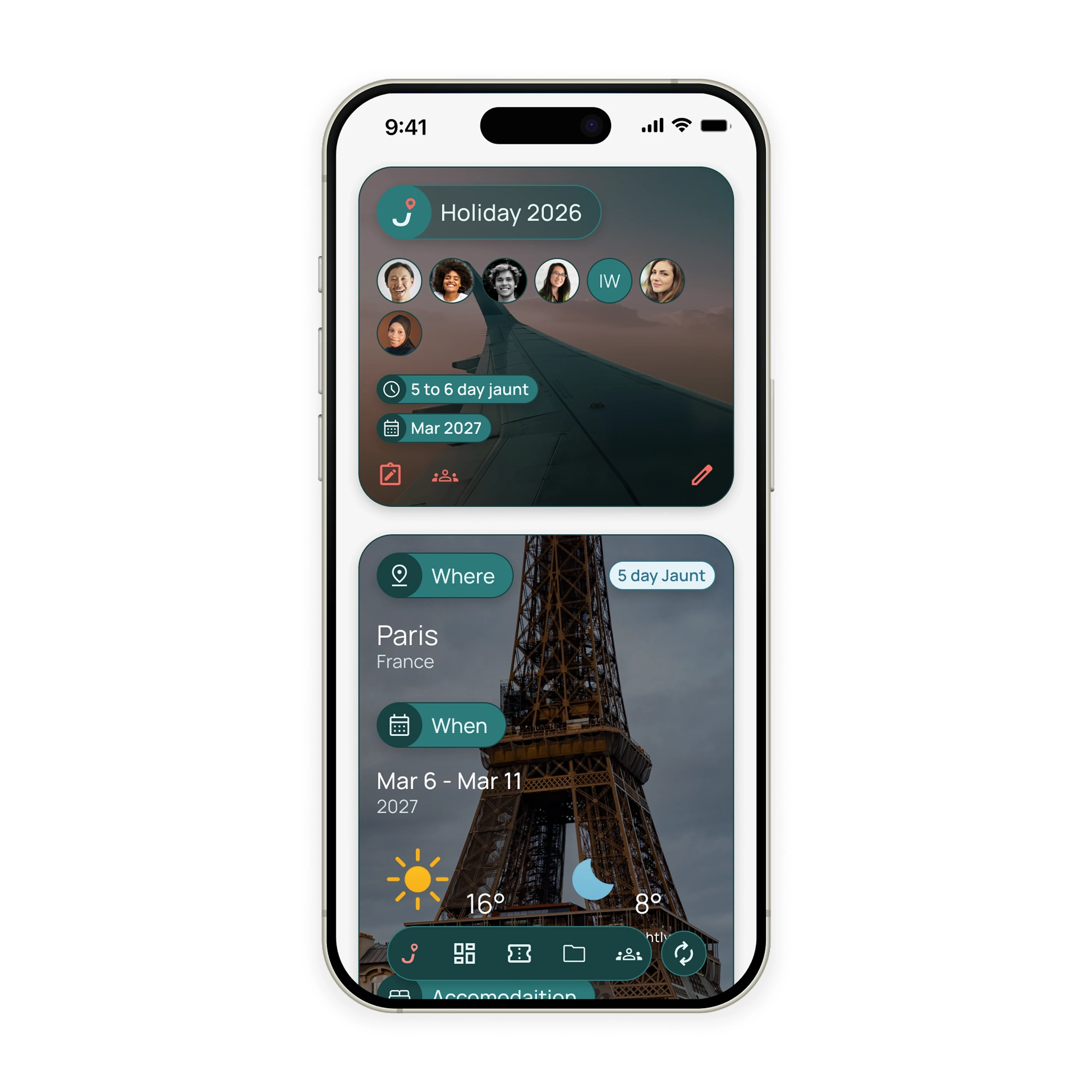
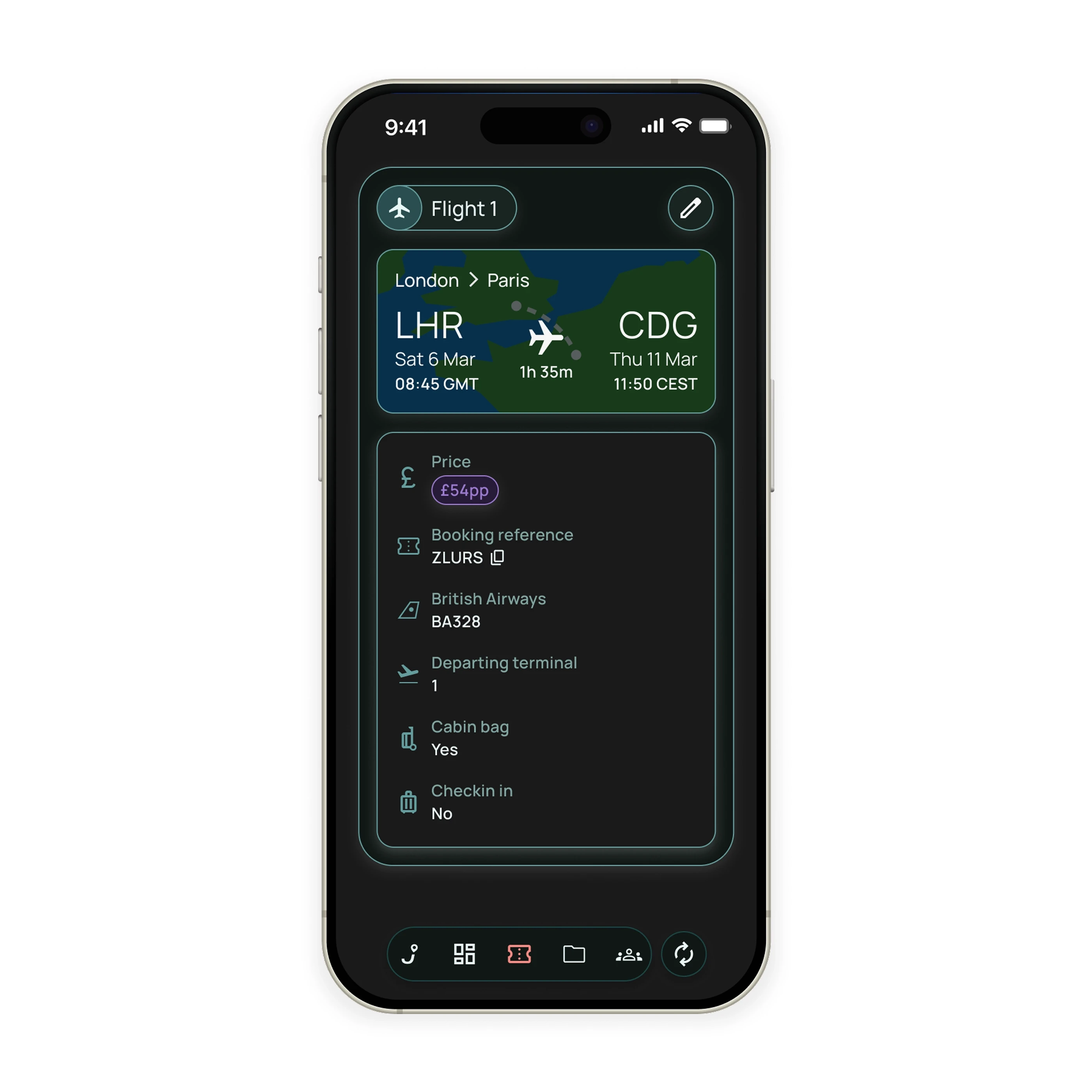
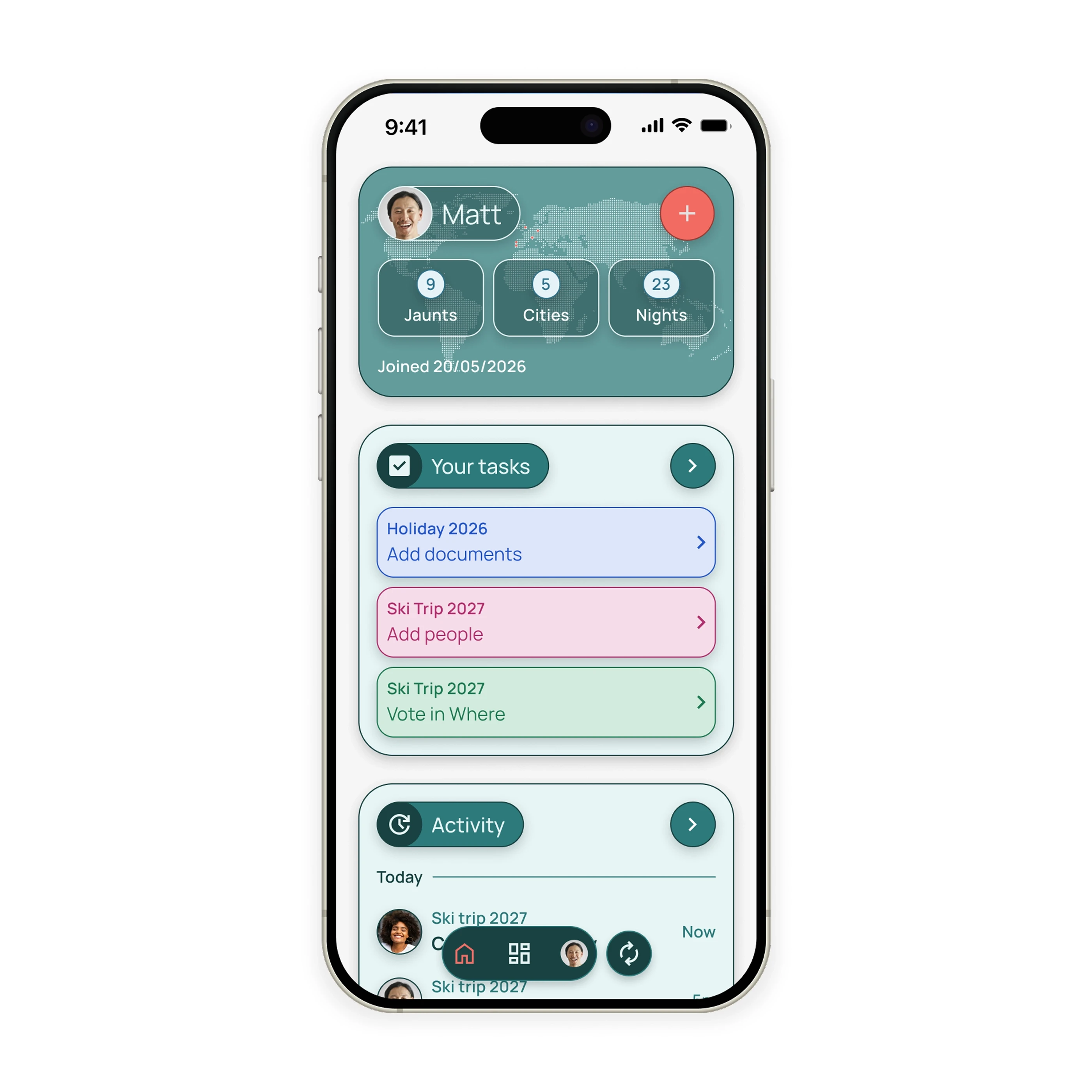
I co-founded Jaunt and lead product and design in a four-person team alongside engineering, operations, and legal and finance. I designed the product from zero: the brand, a light and dark design system checked against WCAG contrast, and every flow from creating a trip to sharing flights and documents. After our engineer set up the stack, I took over day-to-day development and now run the build and the releases myself. Jaunt is a working mobile-first web app with its own dev and production environments, a design system site, a help centre, and a guided demo anyone can try without signing up.
Skills used
Gallery
The Opportunity
The User Problem
The phrase ‘we made it out of the group chat’ exists because most groups don't. Planning is a chaotic mess of buried links, price arguments, and repeat questions. I realised the core problem wasn't the people; it was a total lack of a single source of truth.
The Business Opportunity
For search, we "Google it." For group travel, there's no default verb. The market is still a clumsy combination of WhatsApp and Excel. My competitive analysis looked at tools like Wanderlog, TripIt, Howbout, and Troupe, and revealed a clear gap: existing tools were either too simple, doing too little to help, or too complex, burying users in cluttered interfaces and a steep learning curve. There was clear room for a tool built specifically for this one job, one people would actually come back to every time they planned a trip.
The Strategy, Process, & Design System
My mission was to create the single source of truth for any trip. My process was to first define the core strategy, then build the system to execute it.
Core Strategic Decisions
I architected the product around three key decisions to solve the core user problems:
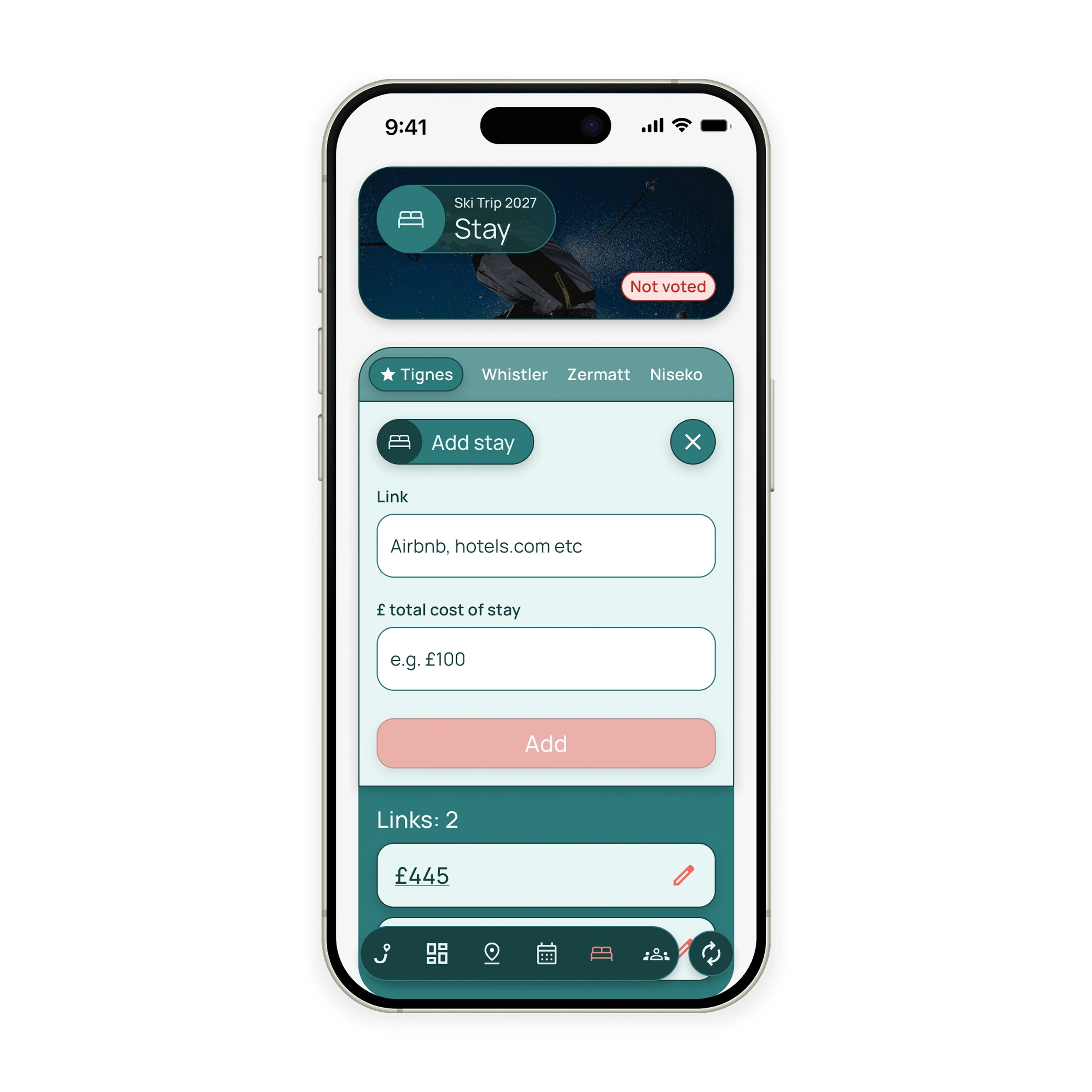
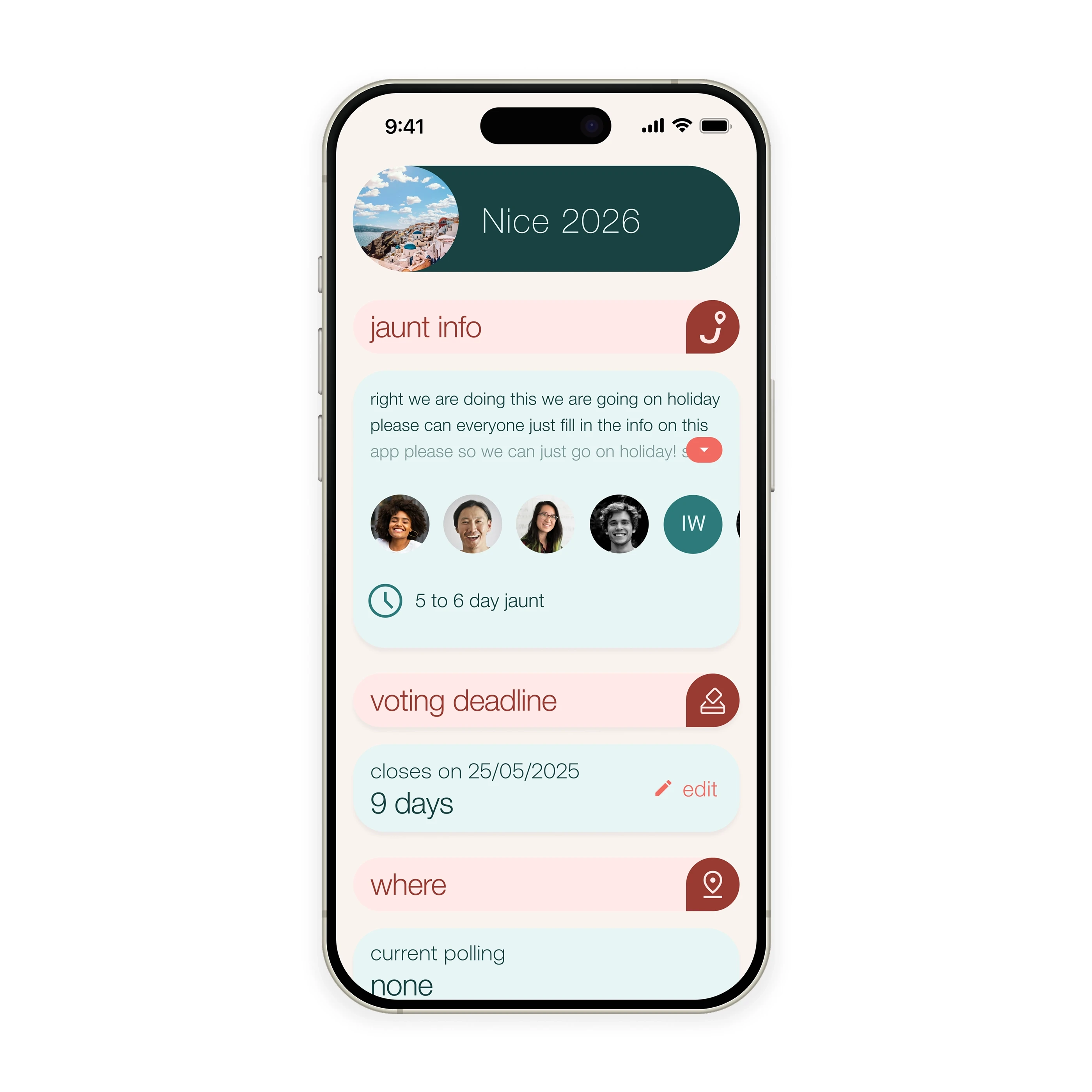
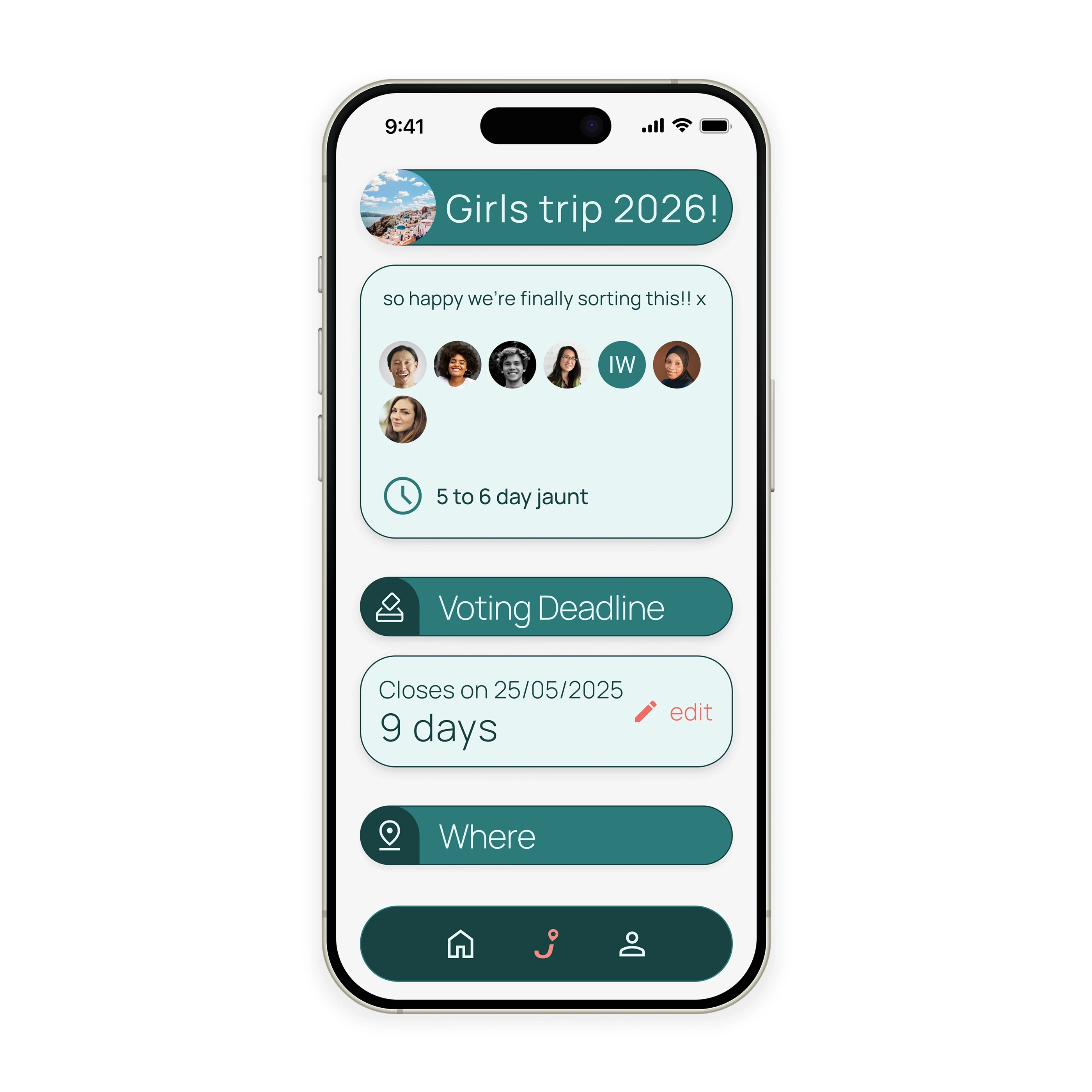
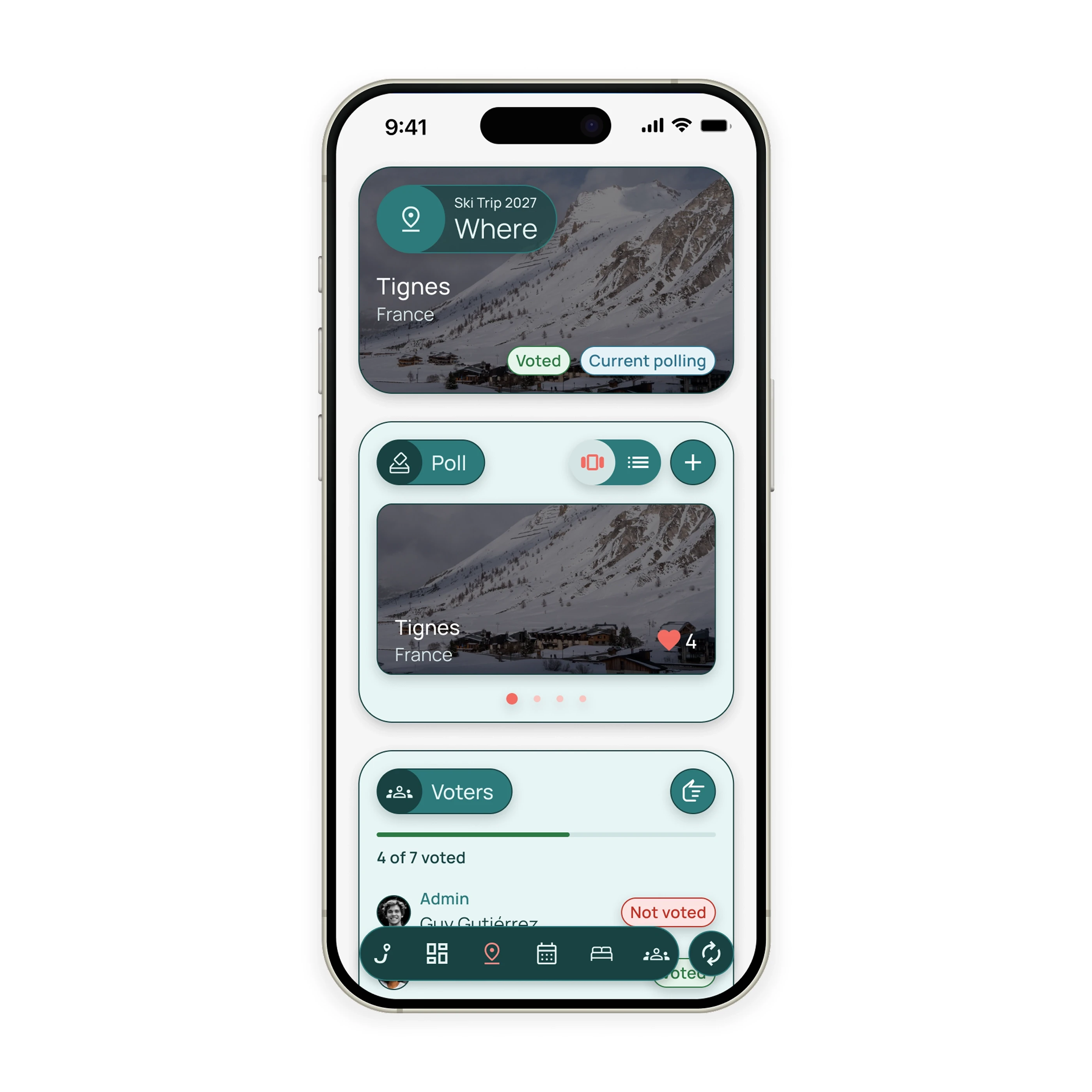
Flexible Collaboration: I designed a system with three user roles (Admin, User, Guest) and made democratic Voting the core mechanic for big decisions.
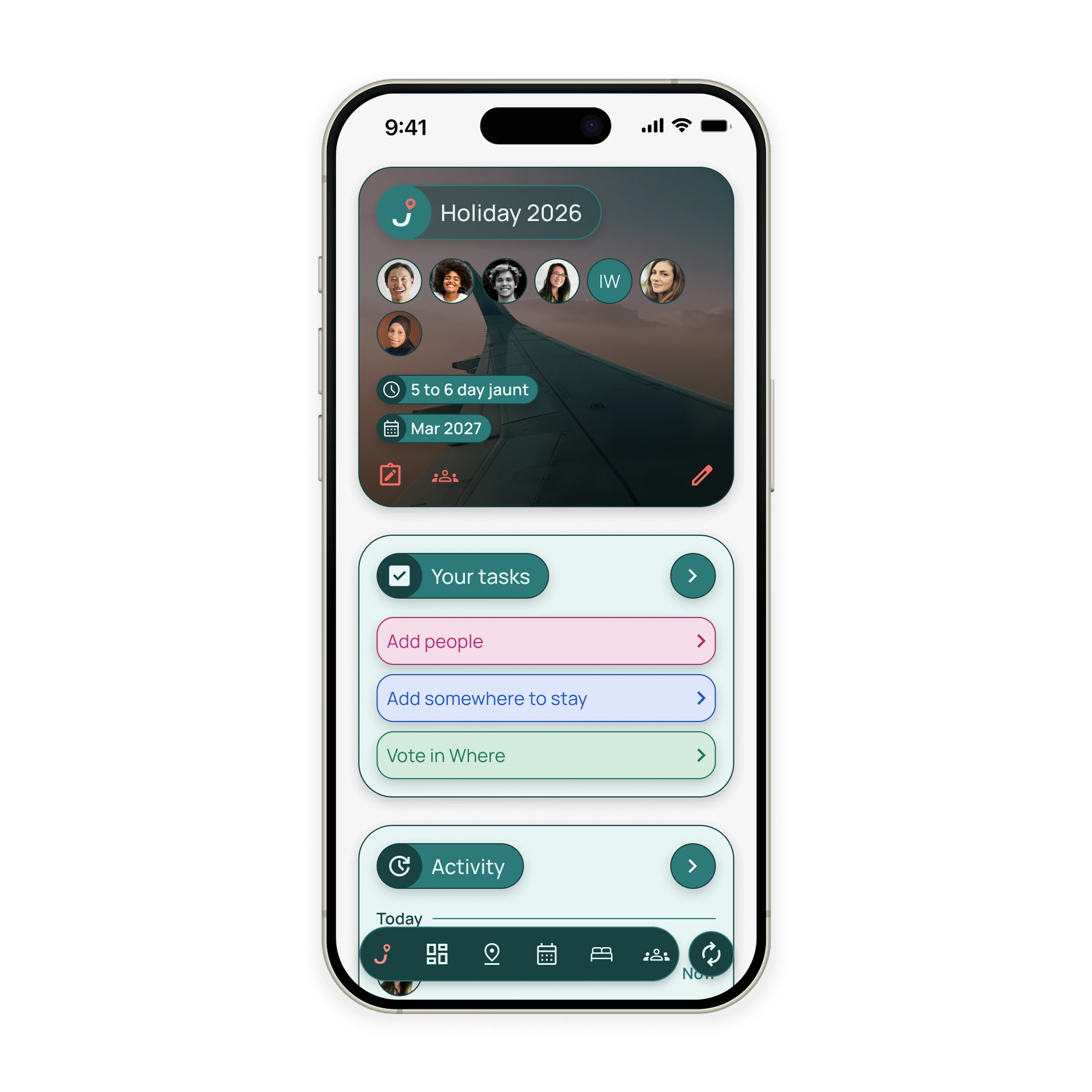
A Phased, Flexible Process: I designed the product in two phases: Phase 1 (Planning) and Phase 2 (Logistics). This allows the plan to adapt to real-world changes.
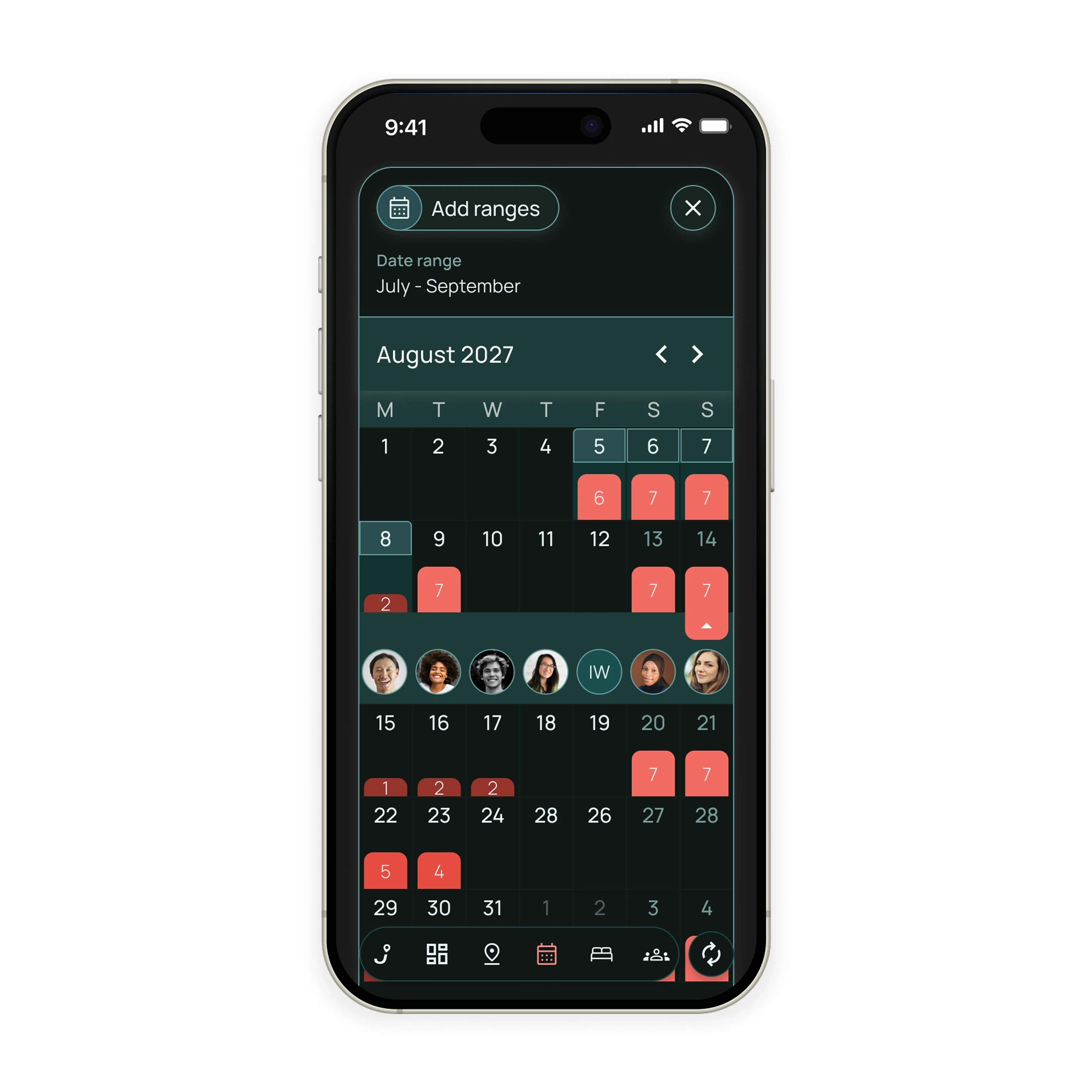
Solving Decision Paralysis: For the “When” poll, I designed a Heatmap Toggle, so people could see popular dates at a glance or add their own without being swayed by others’ choices already on the board.
Brand & Design System
With the strategy set, I built the brand and design system from scratch to ensure a cohesive and scalable build.
Brand Identity: I established the name ‘Jaunt’ (short, playful) and designed the logo (a ‘J’ integrated with a map pin icon).
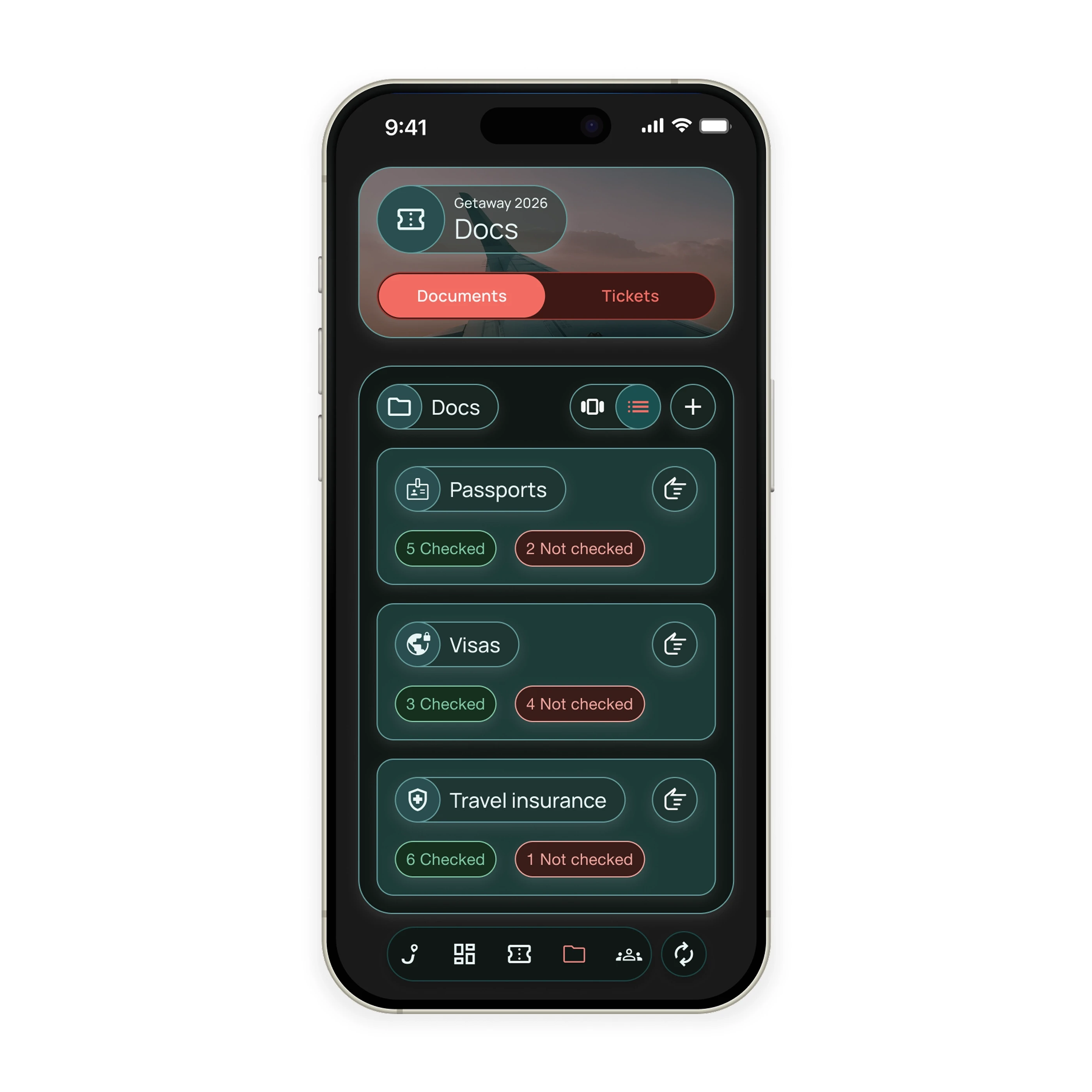
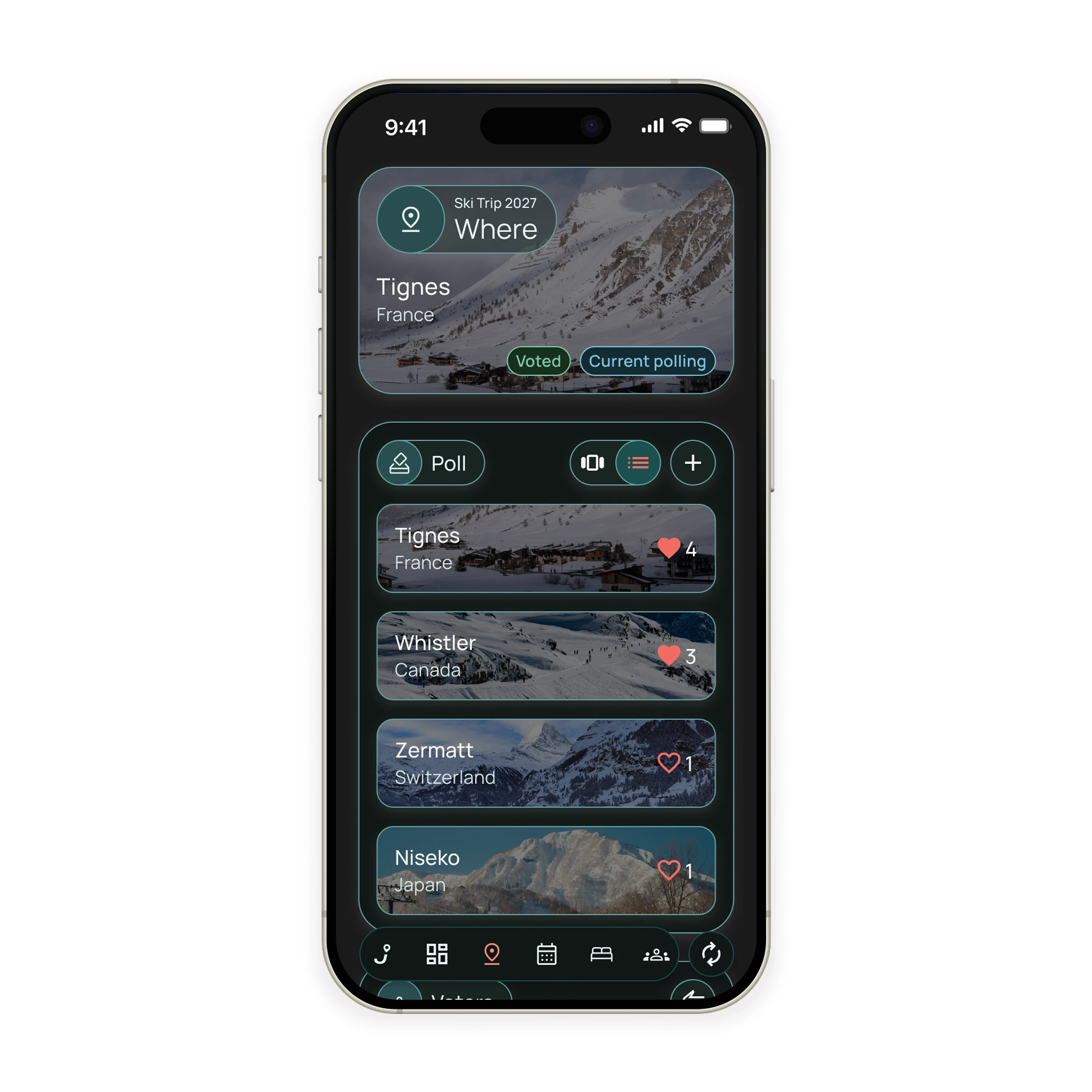
Design System: I built a comprehensive, WCAG-compliant system in light and dark mode, defining the full colour palette, typography, and component behaviour that the product is now built from.
The Solution & Validation
The Solution
Jaunt takes a group trip from a vague idea to a fully organised plan. The three-role system means everyone can be as involved as they want, without losing their say. The two-phase structure lets the plan adapt as things change in the real world. And the Heatmap Toggle turns the usual argument over dates into a fast, low-friction decision. Between them, nobody's left guessing, and everyone knows what they need to do next.
The Validation & Key Iteration
I led user feedback workshops with collaborators and potential users. This validation loop drove two of the product's most important decisions:
Passwordless sign-in with OTP, removing the friction of passwords entirely. Users log in with a one-time code sent to their phone, with sessions held until re-verification is needed, and can change their number any time in account settings.
Replacing disruptive modals with non-disruptive UI (drawers, sliding panels), keeping users in their flow rather than pulling them out of context — vital for a multi-tasking app.
The Build & Next Steps
From design to code
After our engineer set up the stack, I took over day-to-day development. I direct the build with Figma Dev Mode MCP and Claude Code across the React and TypeScript front end, the API and the Postgres database schema, and test every change on real phones.
A design system in code: one set of design tokens drives light and dark mode across the whole app, documented in a docs-as-code site (design.jaunt-travel.io) that updates in the same change as each component.
Native-feeling on the web: safe areas for notches and home bars, correct full-height screens, text-message code autofill, number keypads, self-hosted fonts and lazy-loaded images.
A guided demo: four chapters following one trip, then a free-explore mode, running entirely in the browser with sample data, so anyone can try Jaunt without signing up.
A help centre (help.jaunt-travel.io) with a question-and-answer help bot, plus the marketing site in Framer.
Running the releases
I set up and run delivery myself: a working branch, a dev environment for team testing and a production branch, each deploying automatically to its own Railway environment, with custom domains through Cloudflare DNS. The dev environment sends login codes and invites as emails instead of texts, so the team can test freely.
Next steps
The immediate next step is to launch a first version to real groups, gathering real-world data to validate our core assumptions, then go native on iOS and Android. Longer term, the roadmap includes evolving Jaunt with AI, from personalised recommendations to smart suggestions for travel documents and logistics.