
Allergen Safety Across Kiosk, App and Till
Imagine if your customers and team could ask your products a question: "Can I eat you? Are you still safe to sell?" This is how I designed a system to answer them.
- Role
- Lead Product Designer & Strategist
- Timeframe
- 4 Months
- Platform
- Physical-Digital Ecosystem (iOS / Web)
- Design role
- Sole designer
- Worked with
- Client stakeholders · Directors · Compliance and food safety
Challenge
Pret needed one system that could give real-time, trustworthy allergen answers to customers and staff alike, in every store, while preparing for new EU Digital Product Passport regulation.
Outcome
Validated by the IT Director and escalated to the Global Head of Digital, establishing a scalable system blueprint for a potential rollout.
What I did
This service design solved allergen safety, operational efficiency, and DPP futureproofing for Pret A Manger. I owned the end-to-end logic of a connected ecosystem, using a single QR code to serve different, relevant information to customers and staff. Grounded in first-hand user research, including speaking directly with allergy sufferers and observing store operations, the result was a high-fidelity prototype and an enterprise-ready strategy for a scalable, multi-channel solution.
Skills used
Gallery
The Challenge
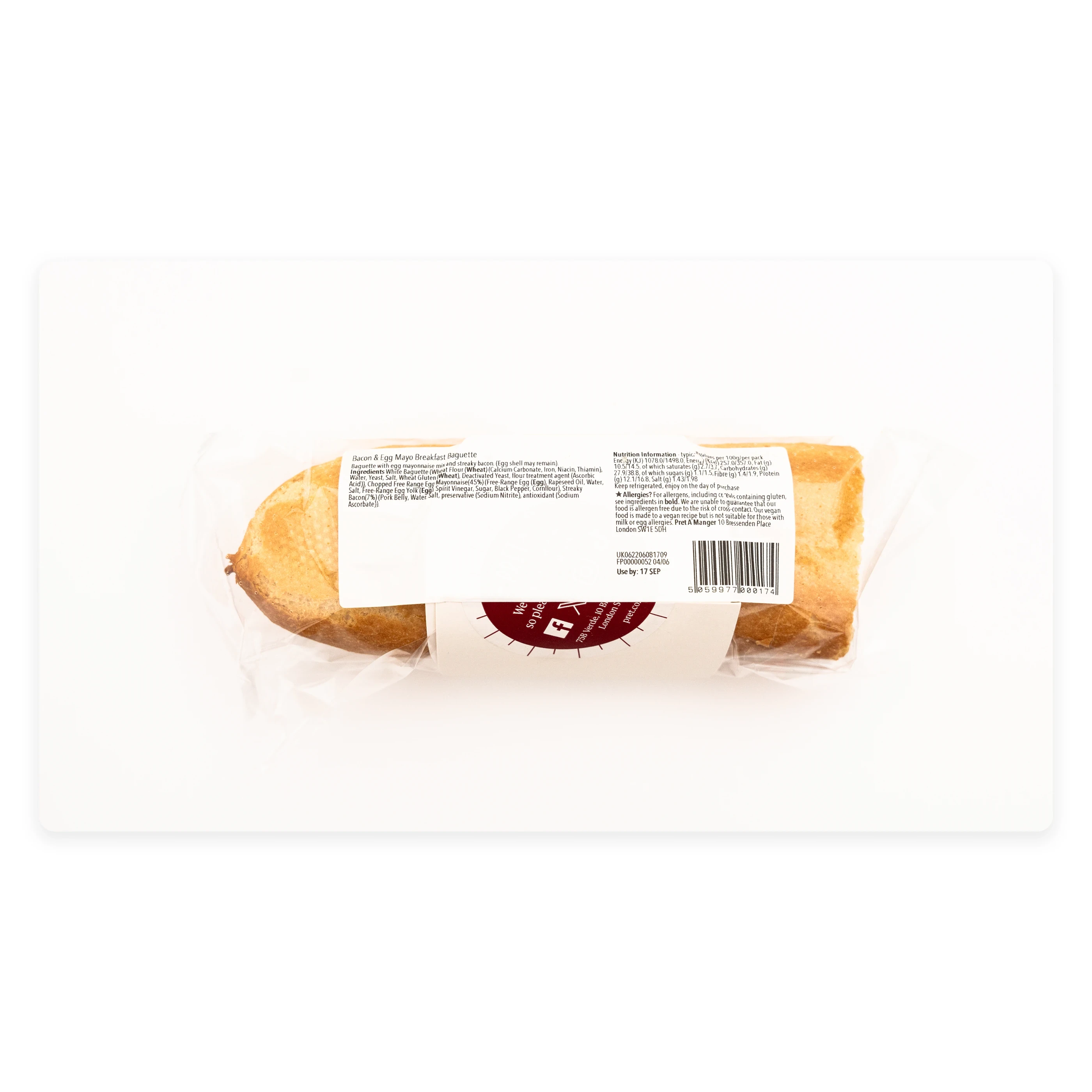
Since Natasha's Law came into effect, all packaging must show full ingredient information with allergens in bold. But this creates its own accessibility problem: the print is often small and only in English, shutting out anyone with poor eyesight or who doesn't read English as a first language.
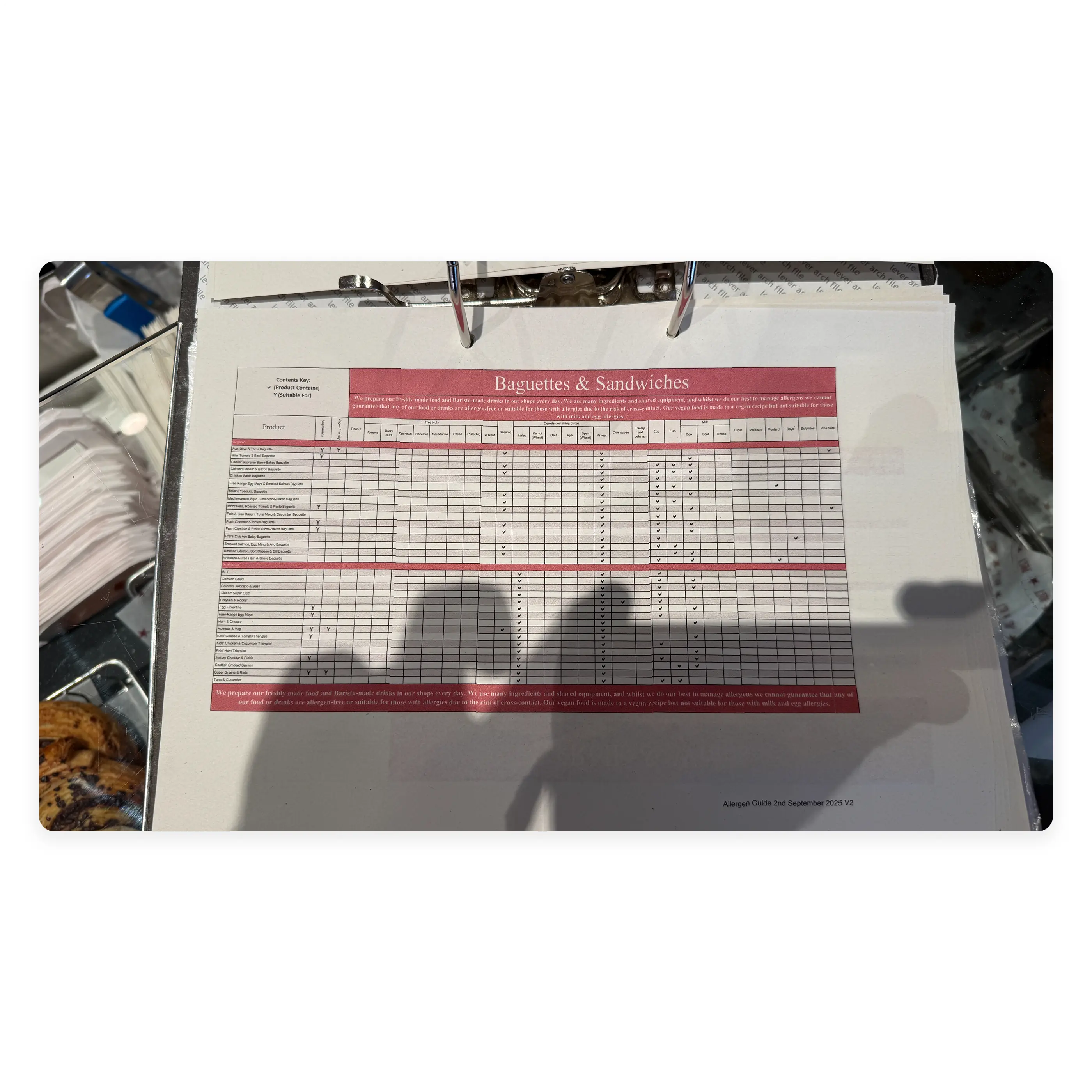
There's a deeper issue too. A label can only tell you about the batch a product came from, not confirm the safety of the individual item in someone's hand right now. That gap between the product and its data plays out like this:
A customer with a peanut allergy enters a busy Pret at lunchtime. They find a team member who wants to help but isn't sure which products are safe. The team member asks a manager, who has to track down the allergen binder. After several minutes, they get an answer, but the process is slow, stressful, and easy to get wrong under pressure.
Multiply that moment across hundreds of stores, and it stops being just a bad customer experience; it's an operational and regulatory risk Pret needed to solve.
The Process
The Initial Brief: Making the Product the Centre of Everything
The brief was straightforward: use Verisera's serialised QR code technology to give every Pret product its own digital identity, so a customer could scan it and get clear, accessible information. That solved the accessibility problem well.
But while working on it, I asked a simpler question: why does someone actually check a product's ingredients in the first place? Almost always, it's to find out if it's safe for them to eat. The brief was a solid technical solution, but not yet a great human one.
Why force someone with an allergy to waste time scanning products, only to find out they can't eat them? Why not just tell them what they can eat in the first place?
The new strategy
That question shifted the whole project from providing information to enabling discovery. I needed a complete, multi-channel journey that reduced allergen risk for customers and improved operational efficiency for staff, not just a single connected product.
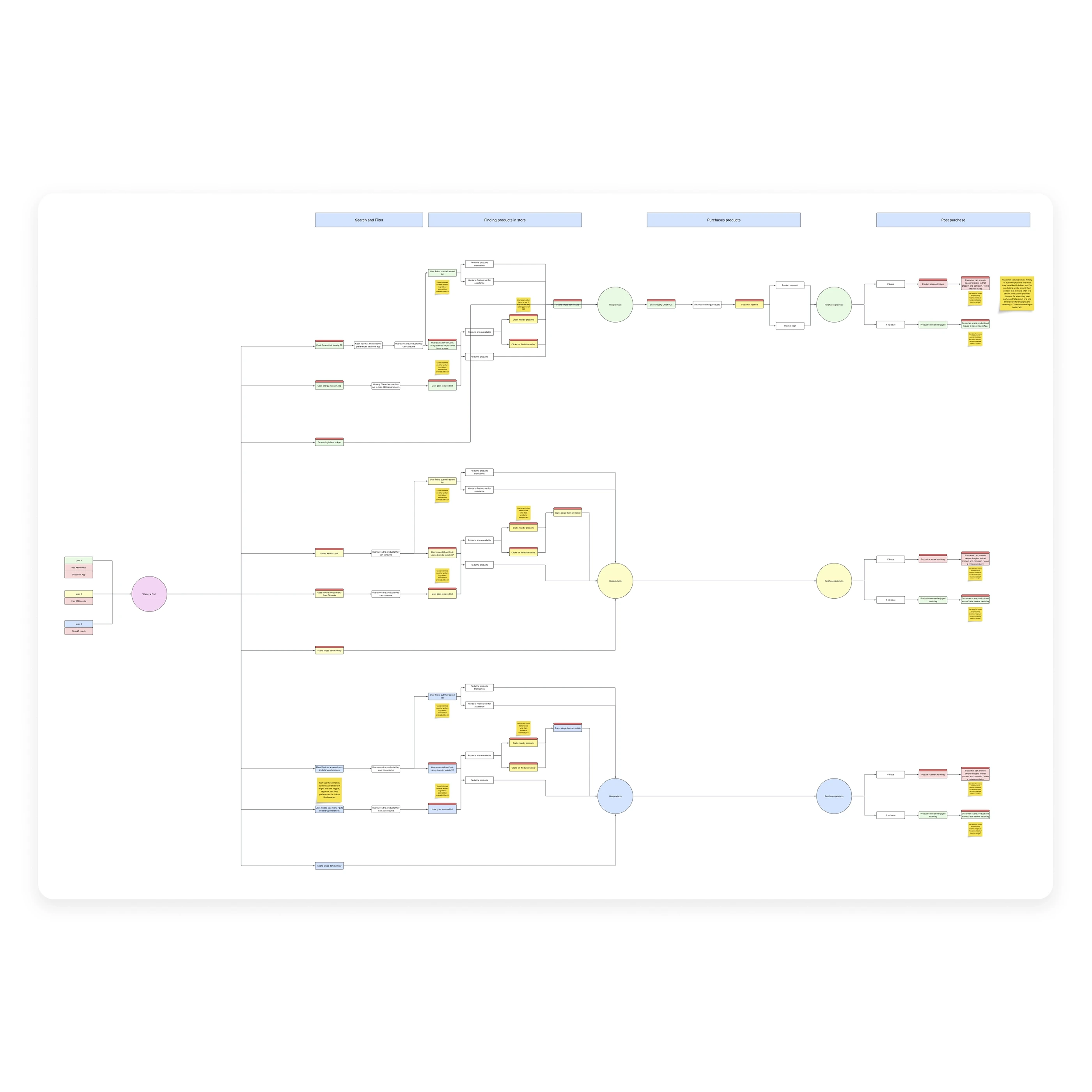
That became the "one code, unlimited experiences" ecosystem, built across three tiers of trust and engagement:
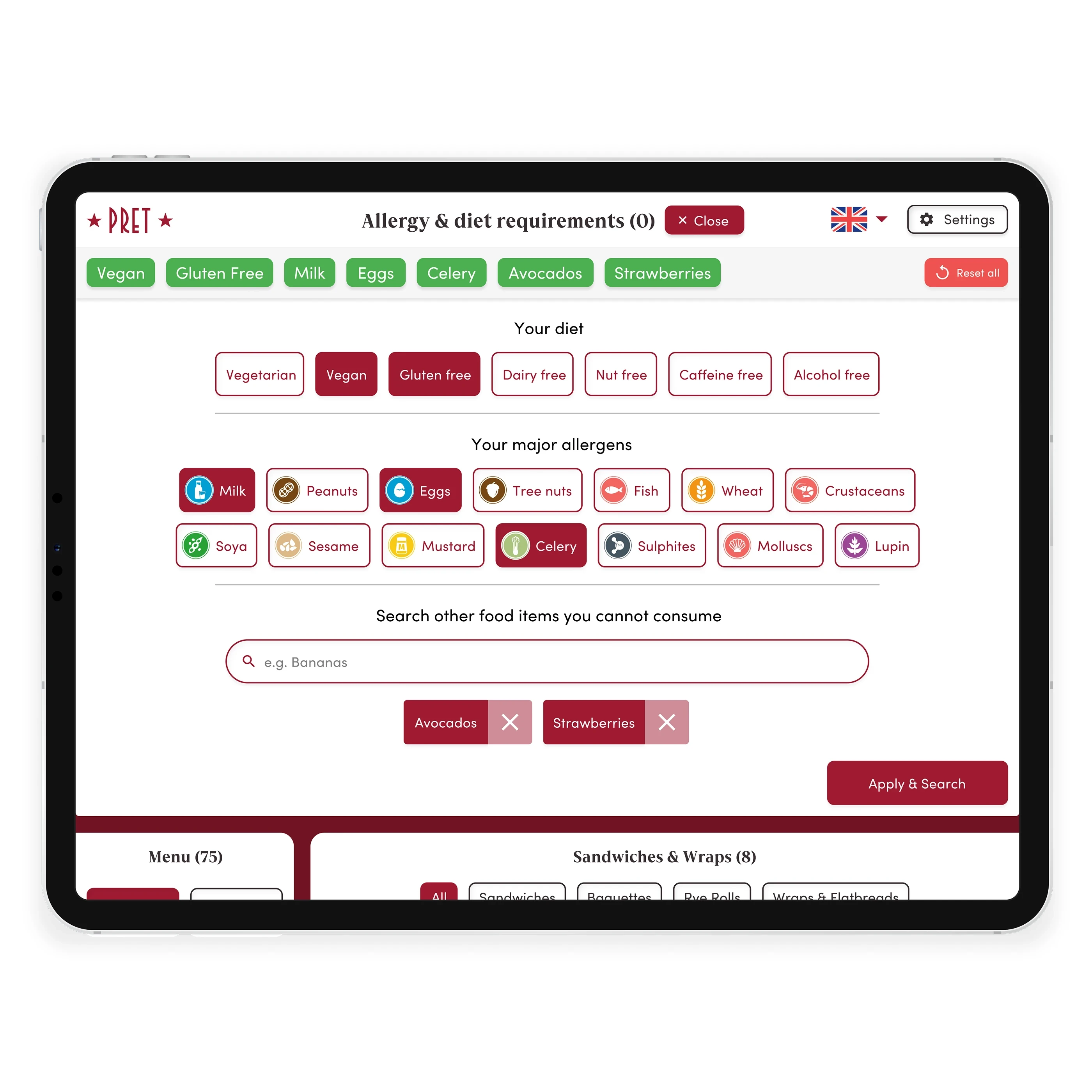
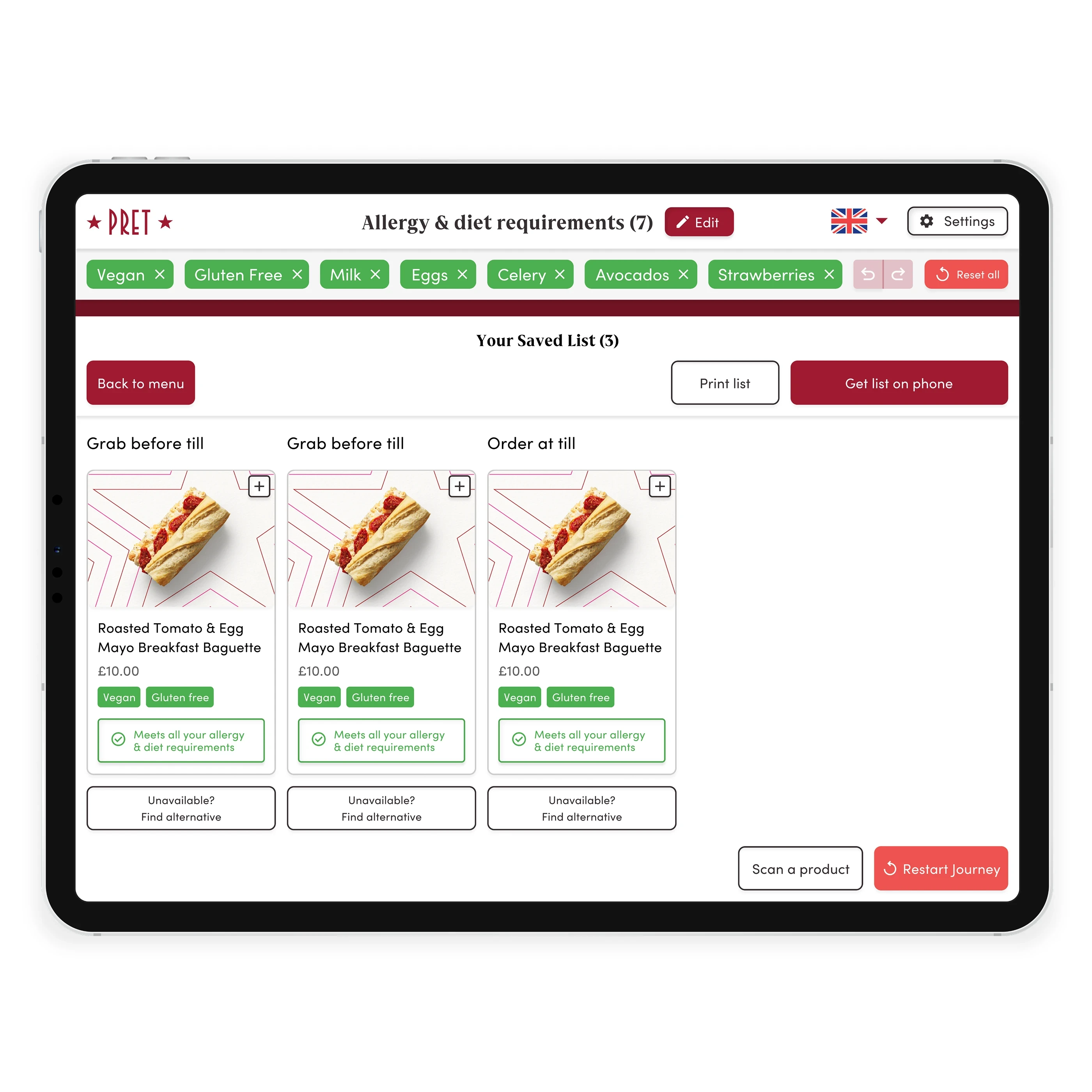
An accessible baseline for everyone — a filterable in-store Kiosk and mobile menu, so anyone can find safe products before they even pick one up.
A standard experience for any scanner — scanning a product's QR code opens its full story: ingredients, audit data, and a feedback channel back to Pret.
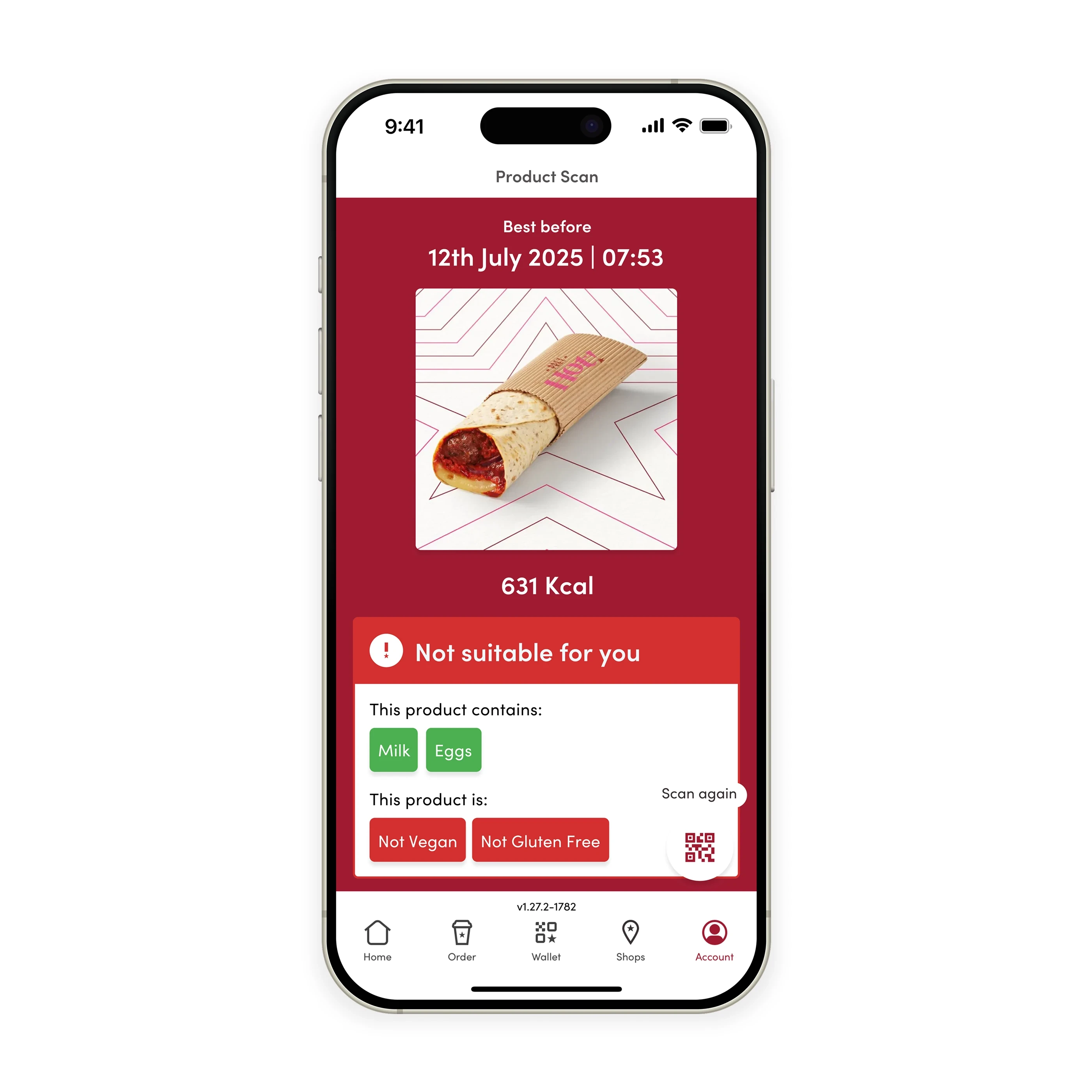
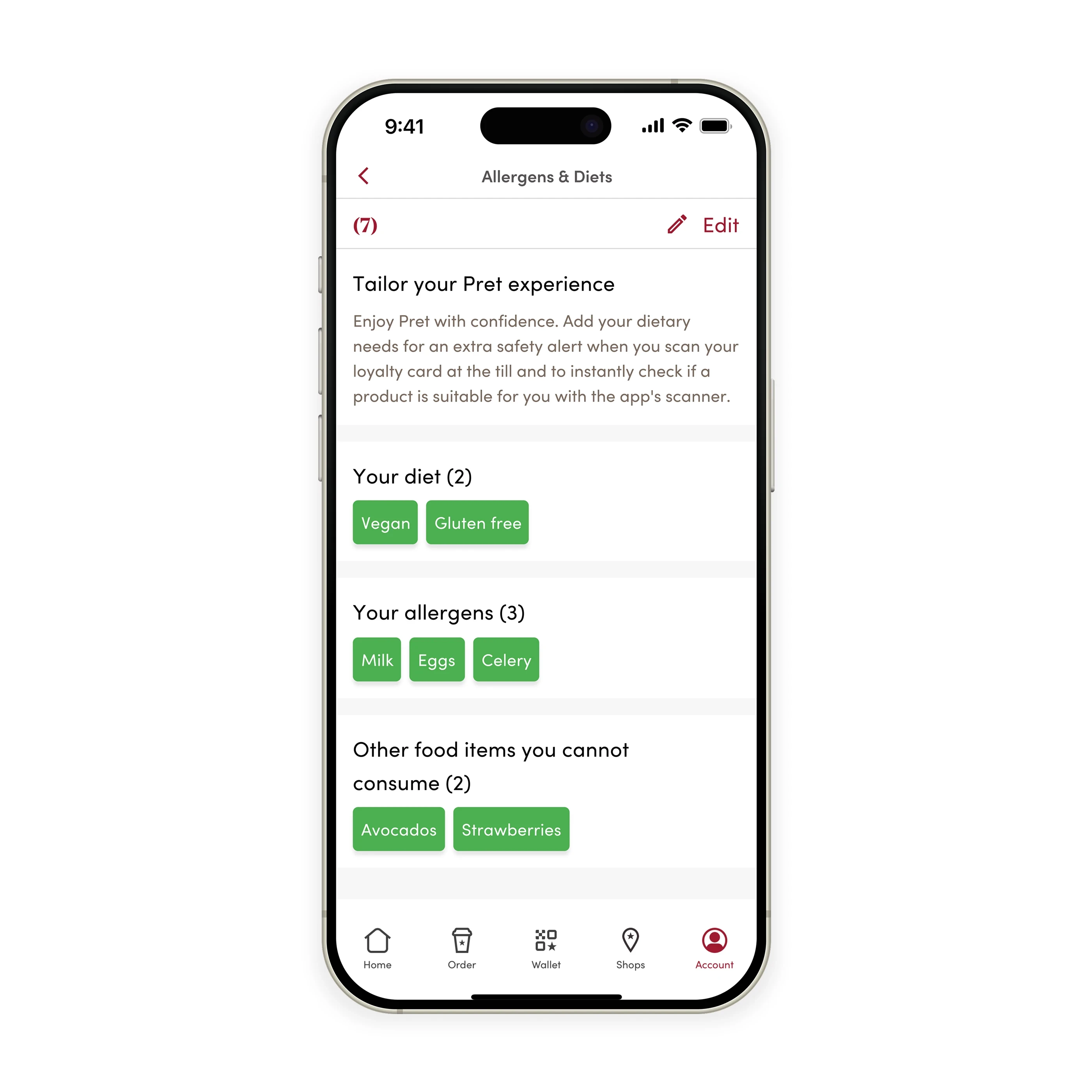
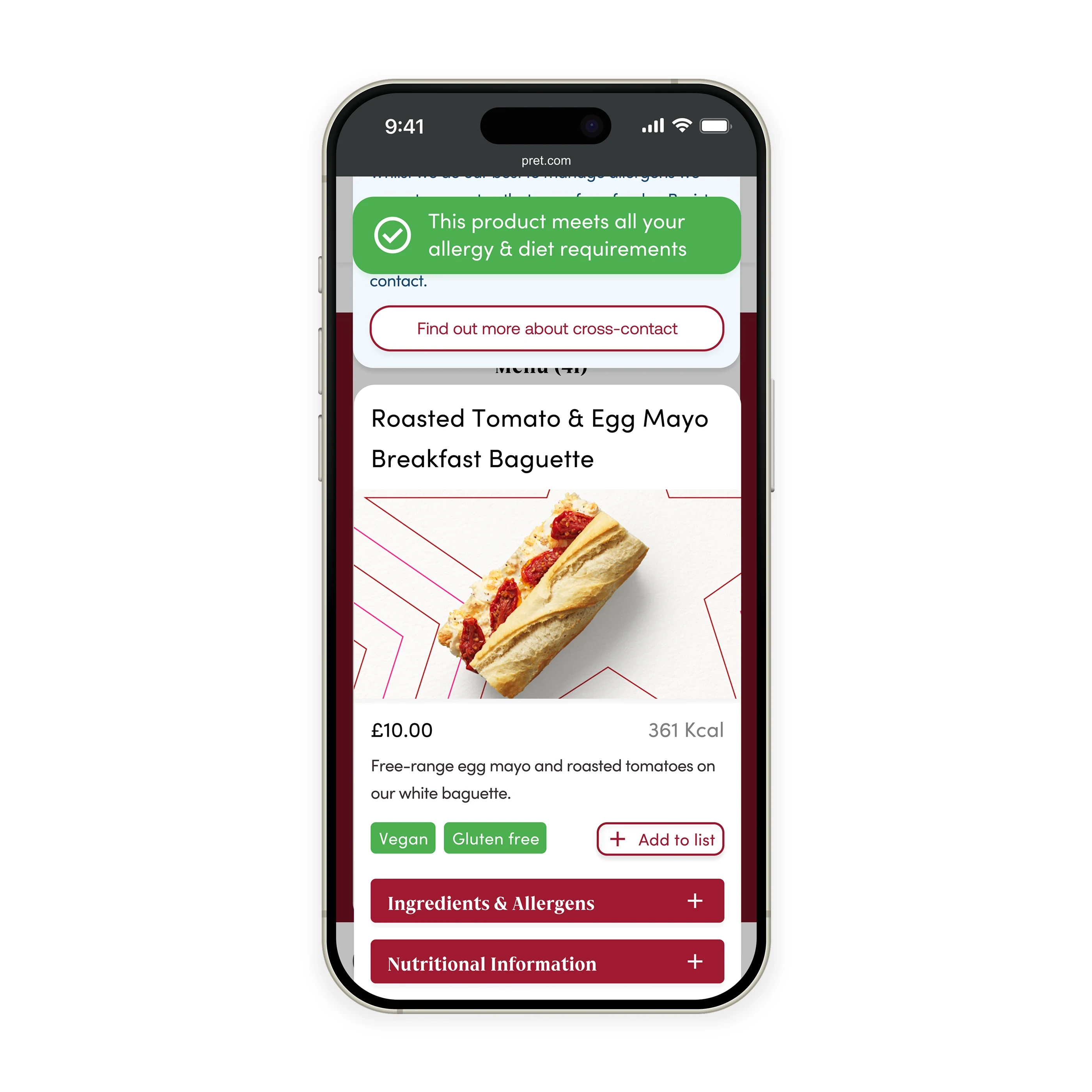
A premium experience for loyal app users — pre-set dietary needs, an instant yes/no on scan, and a final safety check built into the POS system at the till.
That pivot is what turned a simple technical brief into a multi-channel solution with real business value: lower allergen risk, faster service, and a foundation ready for DPP compliance.
The Solution
My strategic pivot required architecting a solution that could serve different users at different levels of engagement. Before I could build the ecosystem, I had to solve its core feature: the filter.
The Core Feature: A Truly Useful Filter
After a deep dive into dietary needs and allergen laws, I broke the filter down into three intuitive categories: Diet (Vegan, etc.), the FSA’s 14 Major Allergens, and Personal Preferences (Avocado, etc.). This three-tier system became the engine for the entire ecosystem.
The Ecosystem in Action
With the filter logic defined, I designed the multi-channel solution as three distinct tiers of access and trust:
1: The Accessible Baseline (For All Customers)
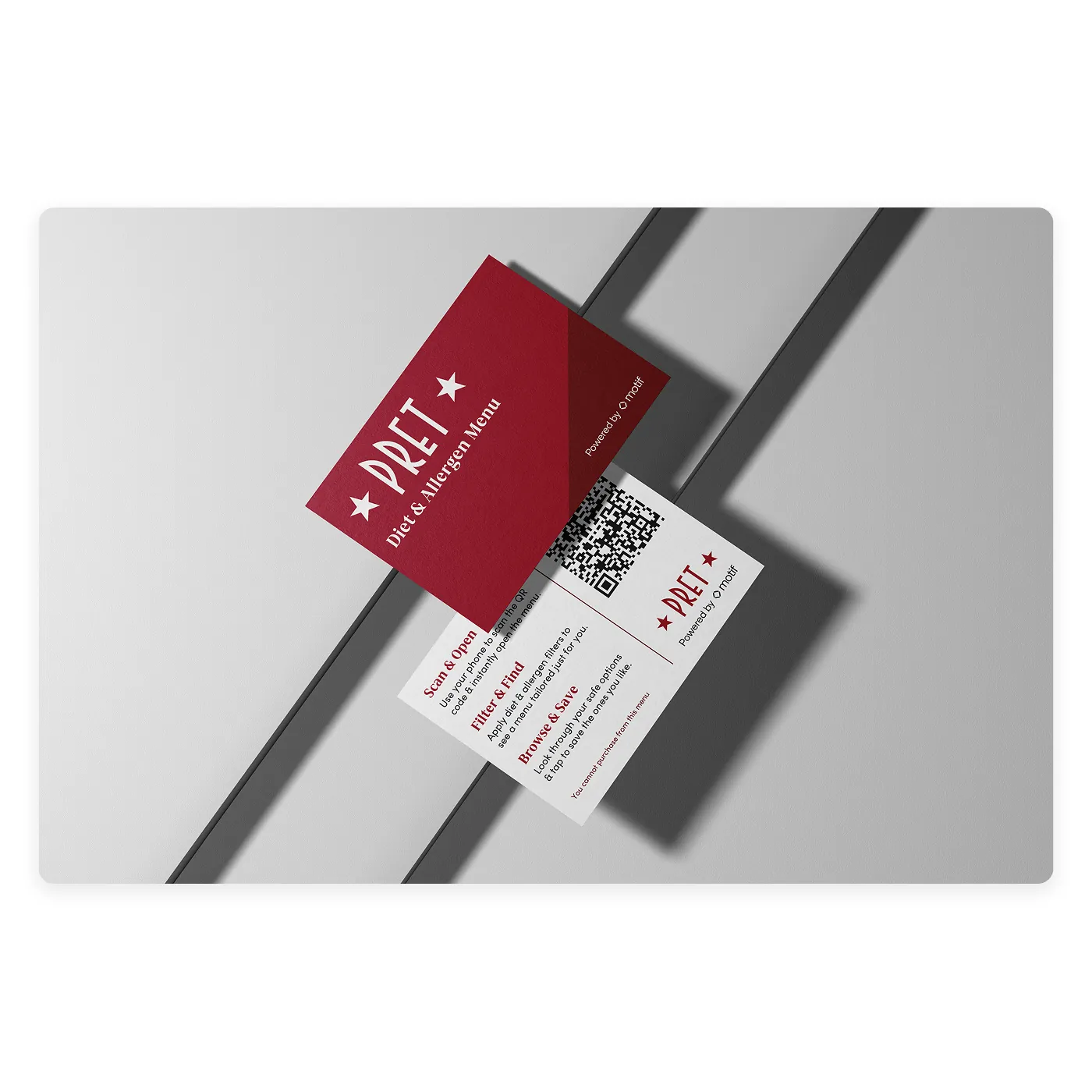
To provide an accessible entry point for everyone, I designed the filter to work on two platforms: a large-screen Kiosk (for in-store assistance) and a simple Mobile Menu (for planning in the queue). Both serve the same goal: letting users find safe products before they even touch them.
2: The Standard Experience (For Any Scanner)
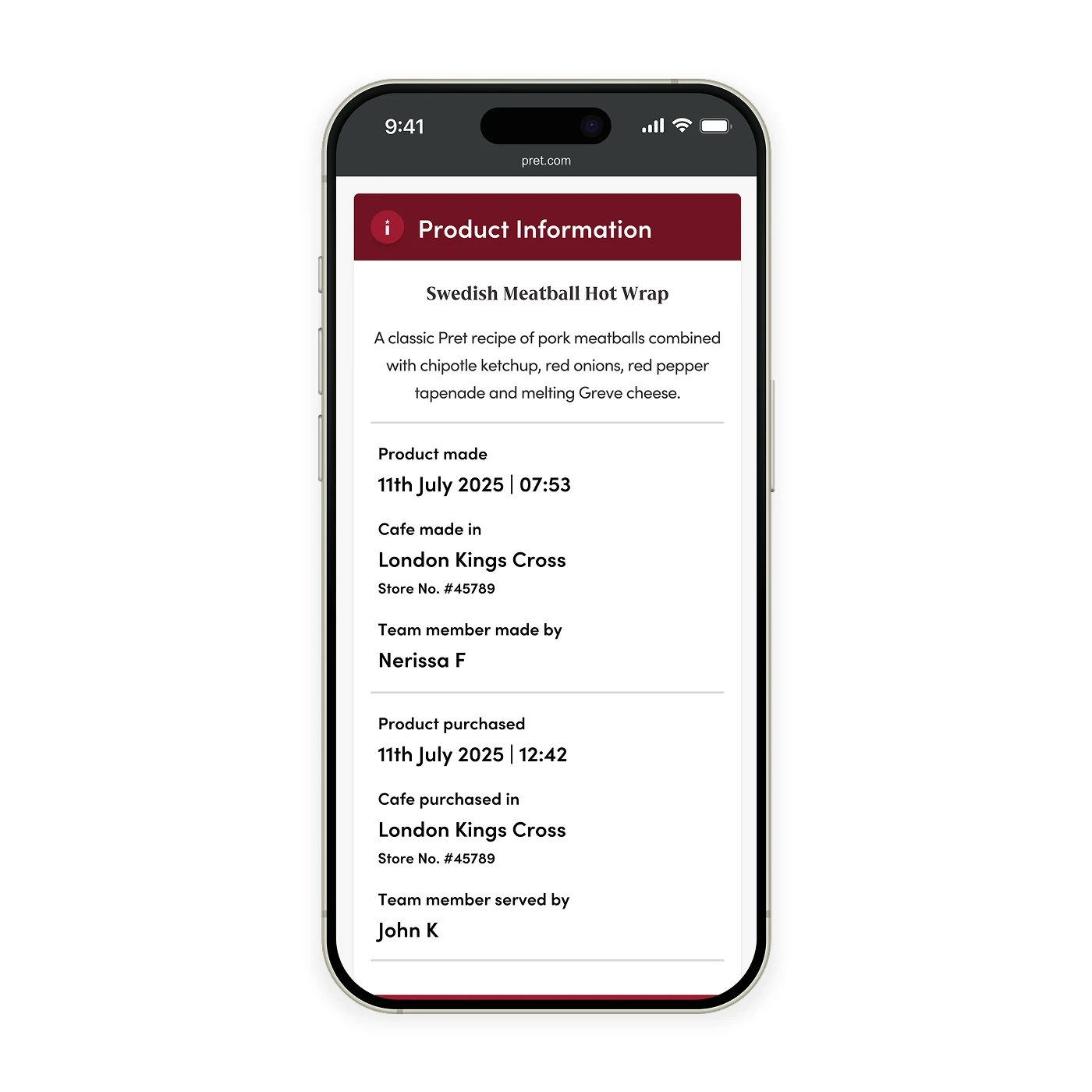
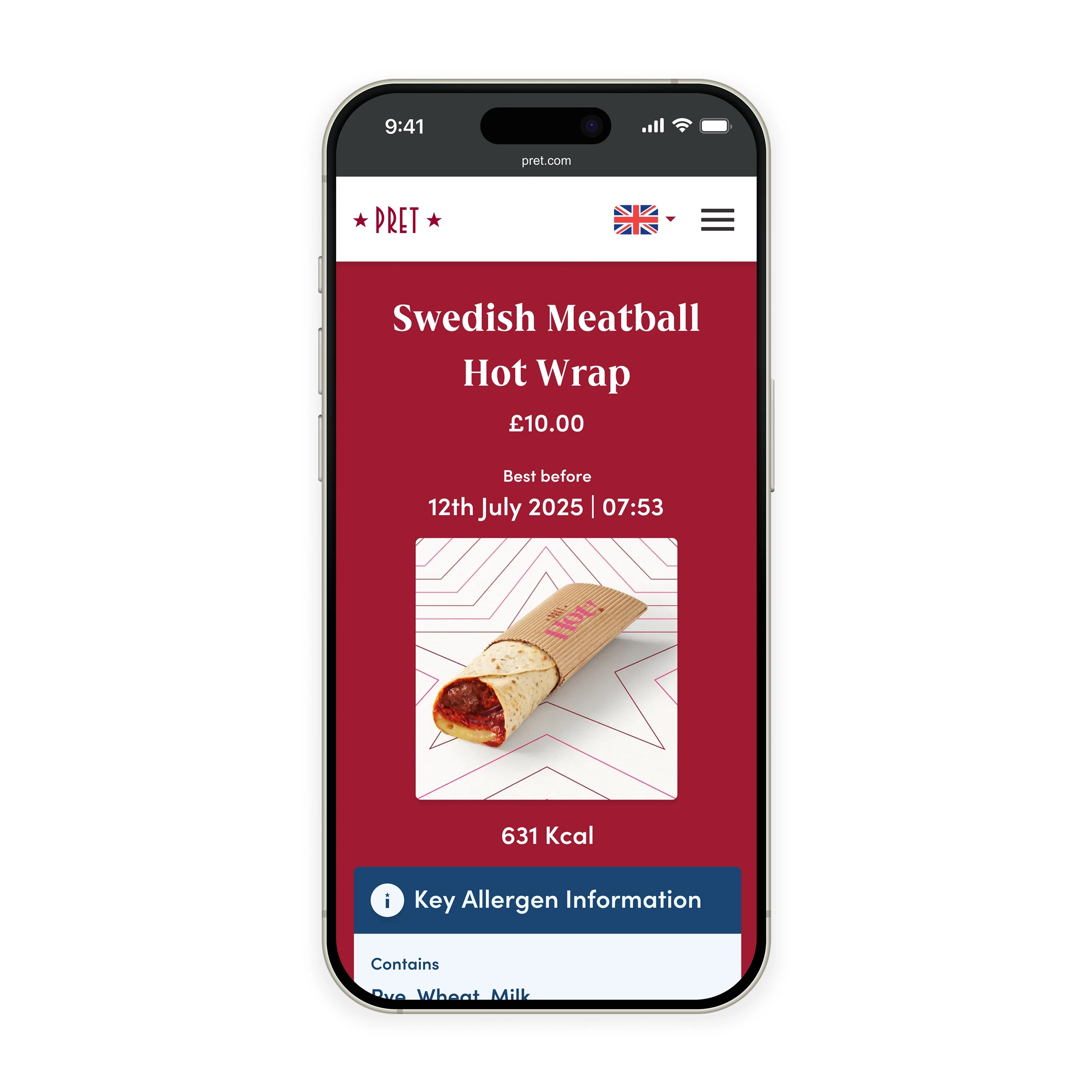
This was the solution to the main brief. A quick scan of any product's QR code opens a web experience showing its unique story, audit data, ingredients, and nutrition, in an accessible format. Crucially, it also includes a feedback channel, allowing the customer to communicate back to Pret.
3: The Pret Experience (For Loyal App Users)
This is the premium, high-trust journey. By allowing users to pre-set their allergies in the app, the cognitive load is shifted from the user to the system. The in-app scan gives an instant "yes/no," and the ultimate feature is the POS integration. This final safety net at the till protects the customer and empowers the team member, turning a standard loyalty app into an essential, trust-building tool.
The Outcome
The final recommendation wasn't a full-scale launch, but a strategic, low-cost proof-of-concept in select stores.
The plan was to use a test-and-learn approach to gather the quantitative and qualitative data needed for a confident, wider rollout, testing:
Brand perception and customer satisfaction
Operational efficiency and team performance
This gave Pret a clear, data-driven business case for a broader rollout. The prototype passed a follow-up review with the IT Director and was escalated to the Global Head of Digital for final consideration.