
Automating the Job I Used to Do by Hand
How I designed the software that made my own job obsolete.
- Role
- Lead Product Designer & Strategist
- Timeframe
- 2 Years
- Platform
- B2B Enterprise Automation Platform
- Design role
- Sole designer
- Worked with
- Engineers · Client stakeholders · Directors · Global teams
- 30 min → 5 min
- time per daily batch
- 10+ hours
- saved every month
- 6,400+
- codes made by hand before the platform
- 0
- known validation errors in two years
Challenge
For over a year, I was the person manually validating spreadsheets and deploying QR codes for Beam Suntory, a slow, error-prone process I knew from the inside. The challenge was turning that first-hand pain into a centralised, self-service platform the client could run themselves.
Outcome
Launched a self-service platform that removed a recurring 10+ hour monthly workload. It is still used by Beam Suntory teams globally, generating the QR codes on nearly all their products, with no reported data validation errors in the two years since launch.
What I did
I was the person running Beam Suntory's manual QR code validation process myself, for over a year, before designing its replacement. As lead product designer, I architected an end-to-end self-service platform that let the client securely generate, validate, and manage mass asset deployment on their own. Because I'd lived the old process firsthand, I could design directly against its real pain points, not just a brief describing them.
Skills used
Gallery

The Challenge
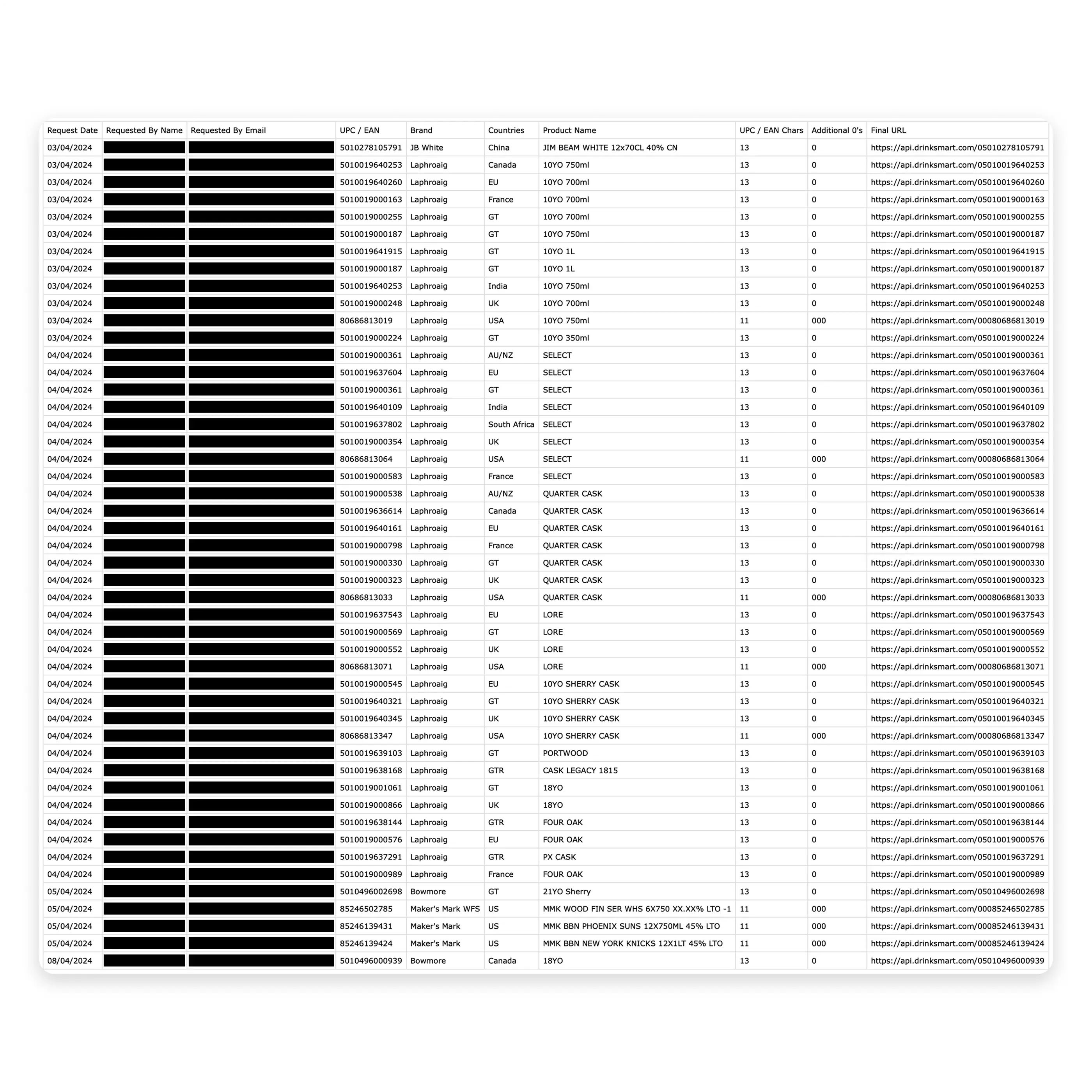
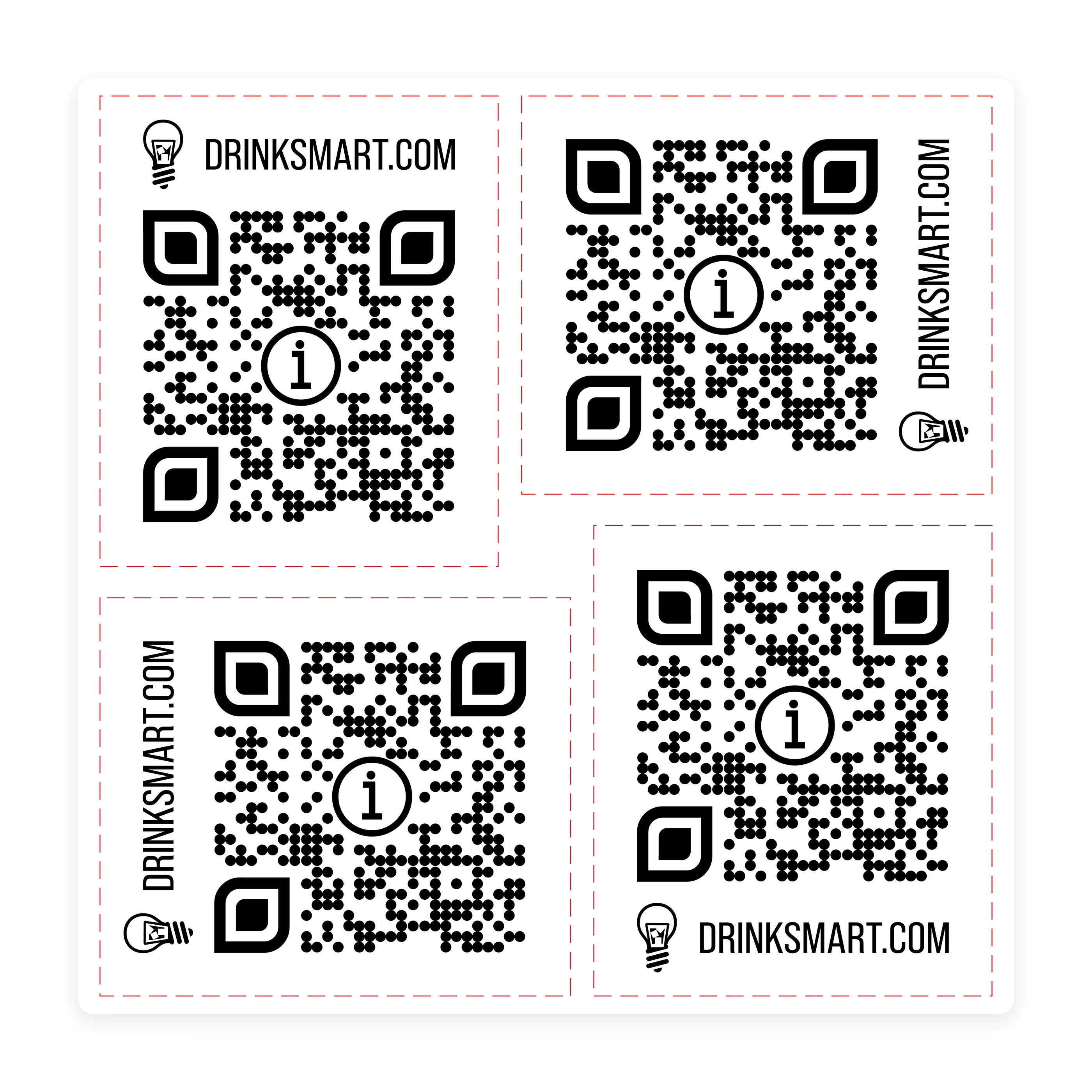
For over a year, my daily reality was a manual, repetitive process. At 4pm, I'd check the client's spreadsheet for new requests. For each one, I had to manually build a URL, import a CSV into an internal tool, map the data, generate 8 different QR code variations (different colours, logo placements), download them, then manually scan and test every single one before sending them over.
This cost over 10 hours of my time every month. If I wasn't there to do it, it simply didn't happen, leaving a frustrated client and a growing backlog. It was unscalable, inefficient, and had a single point of failure: me.
Nobody else was better placed to fix it. I'd lived every step of the pain firsthand, which meant I already knew exactly where the process broke down, and exactly what a good replacement needed to do.
The Process
My approach was straightforward: I was the user. Having run this manual workflow myself every day for a year, I didn't need to guess at the problems, I'd lived every one of them.
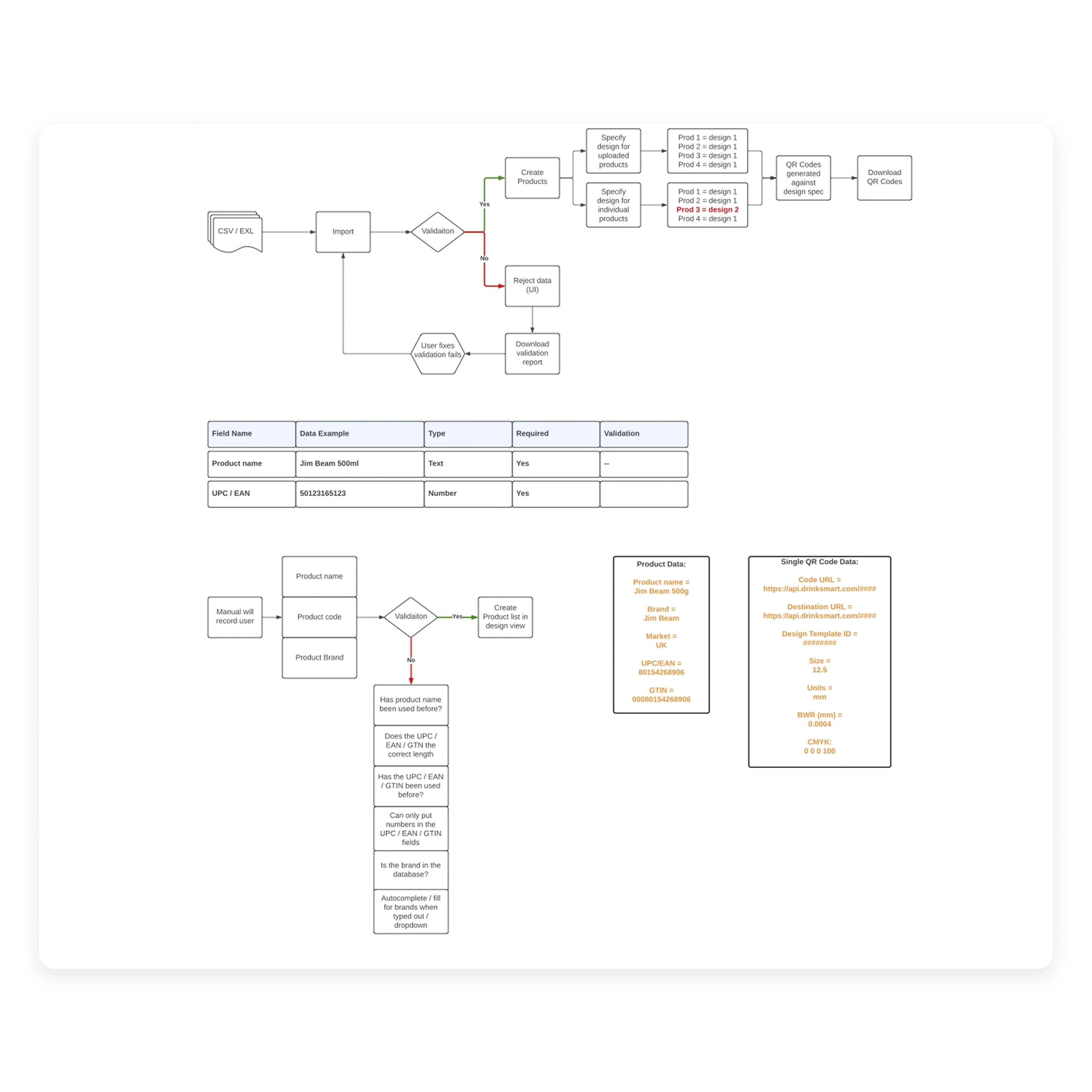
I started by mapping the entire end-to-end manual process, from checking the spreadsheet at 4pm to individually scanning each of the 8 QR code variations. That detailed map of the 'before' state became the foundation for the new, automated journey, and it's what surfaced the single biggest risk and time-sink: manual testing. That insight made an automated validation system a non-negotiable core requirement, the single decision that would eliminate both the point of failure and the human error it caused.
The Solution
The result is a clean, intuitive enterprise platform that turns a 30-minute manual task into a five-minute one.
1. Simple & Flexible Data Input
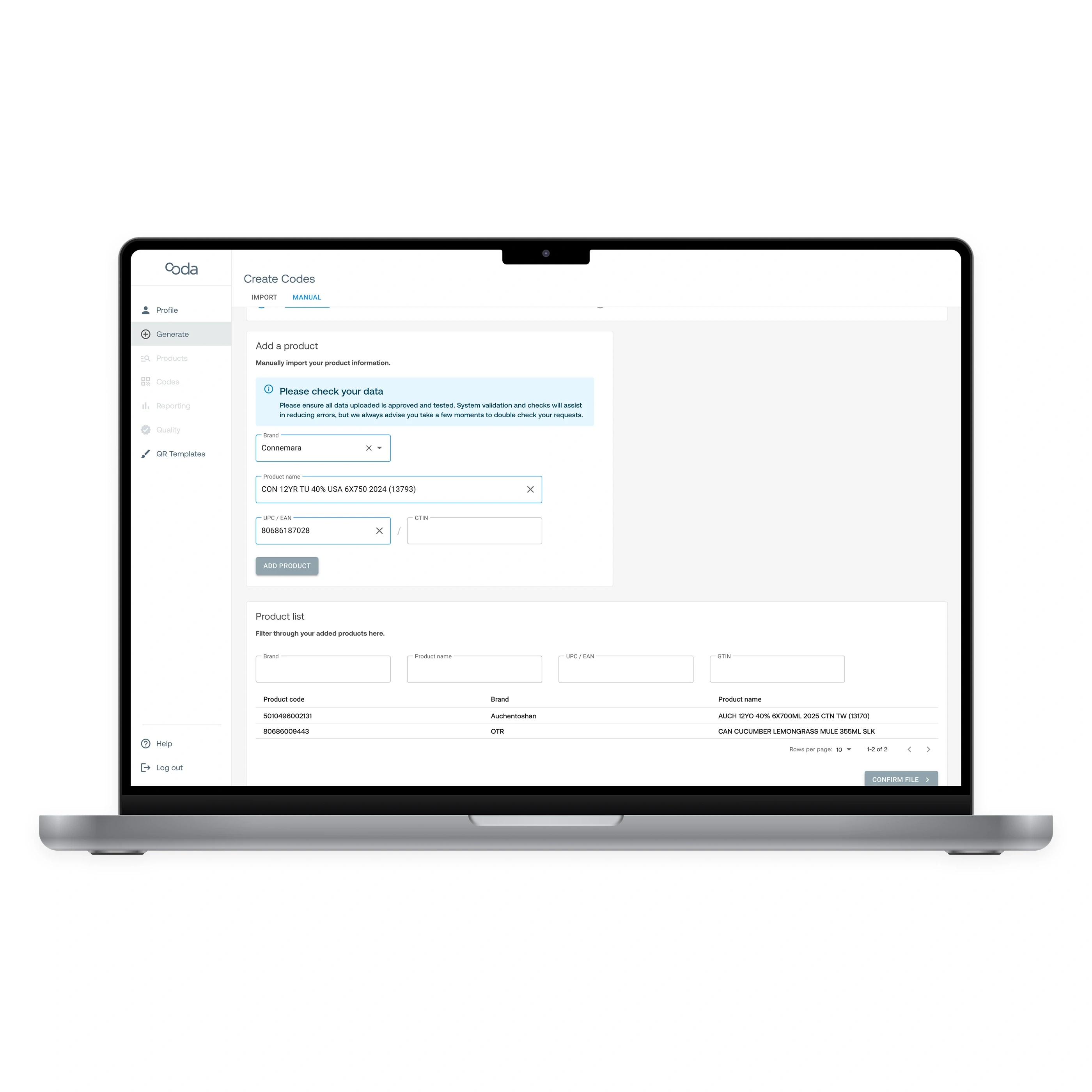
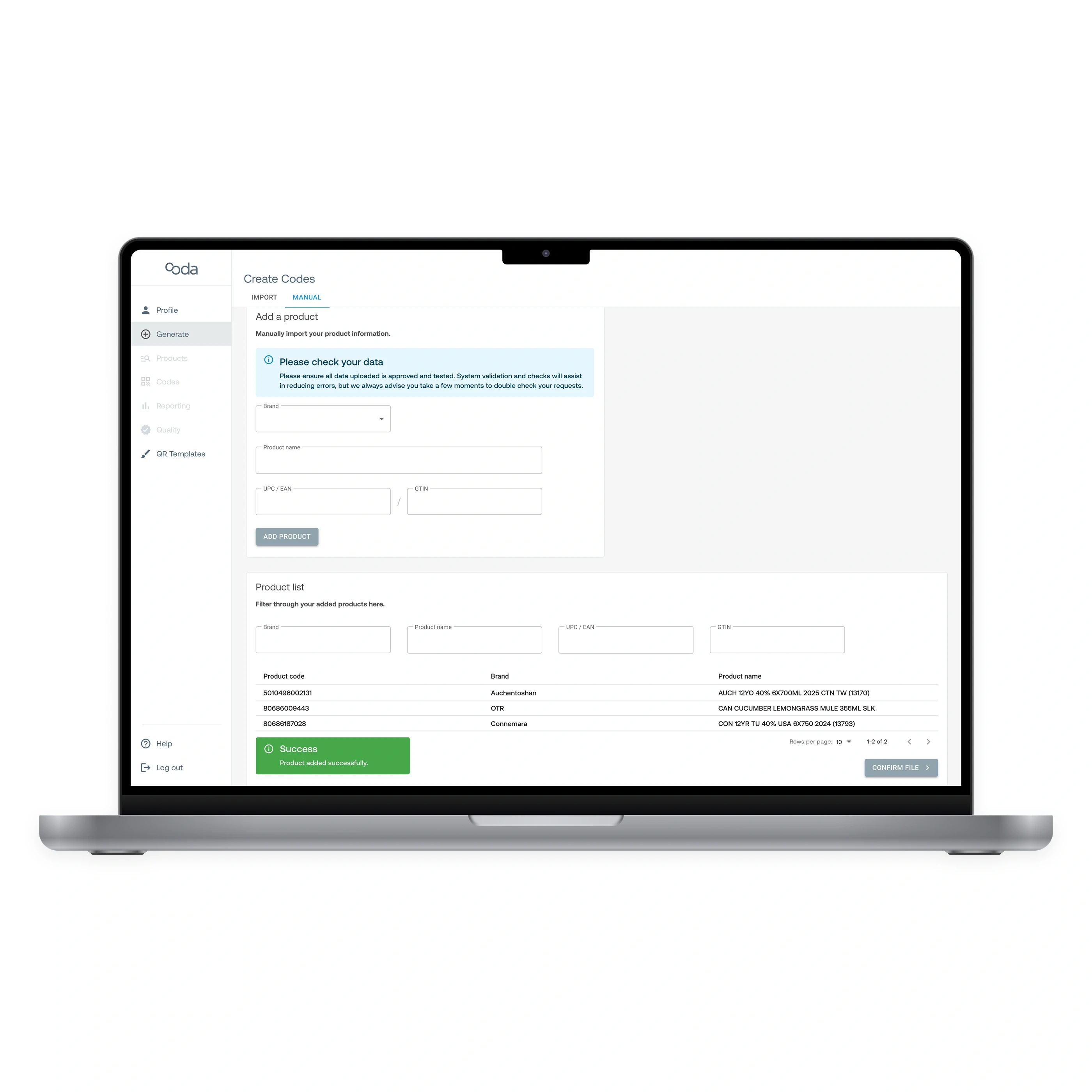
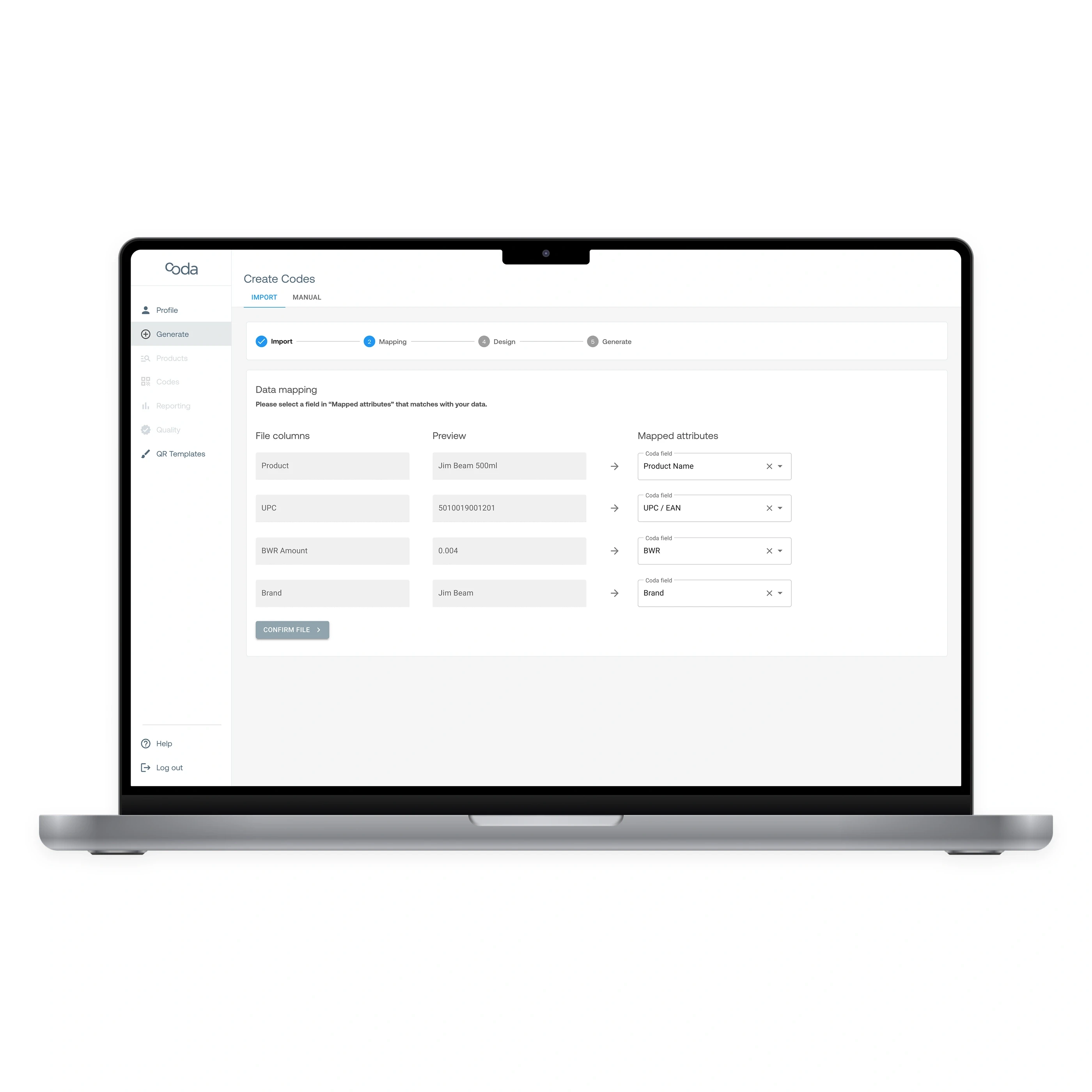
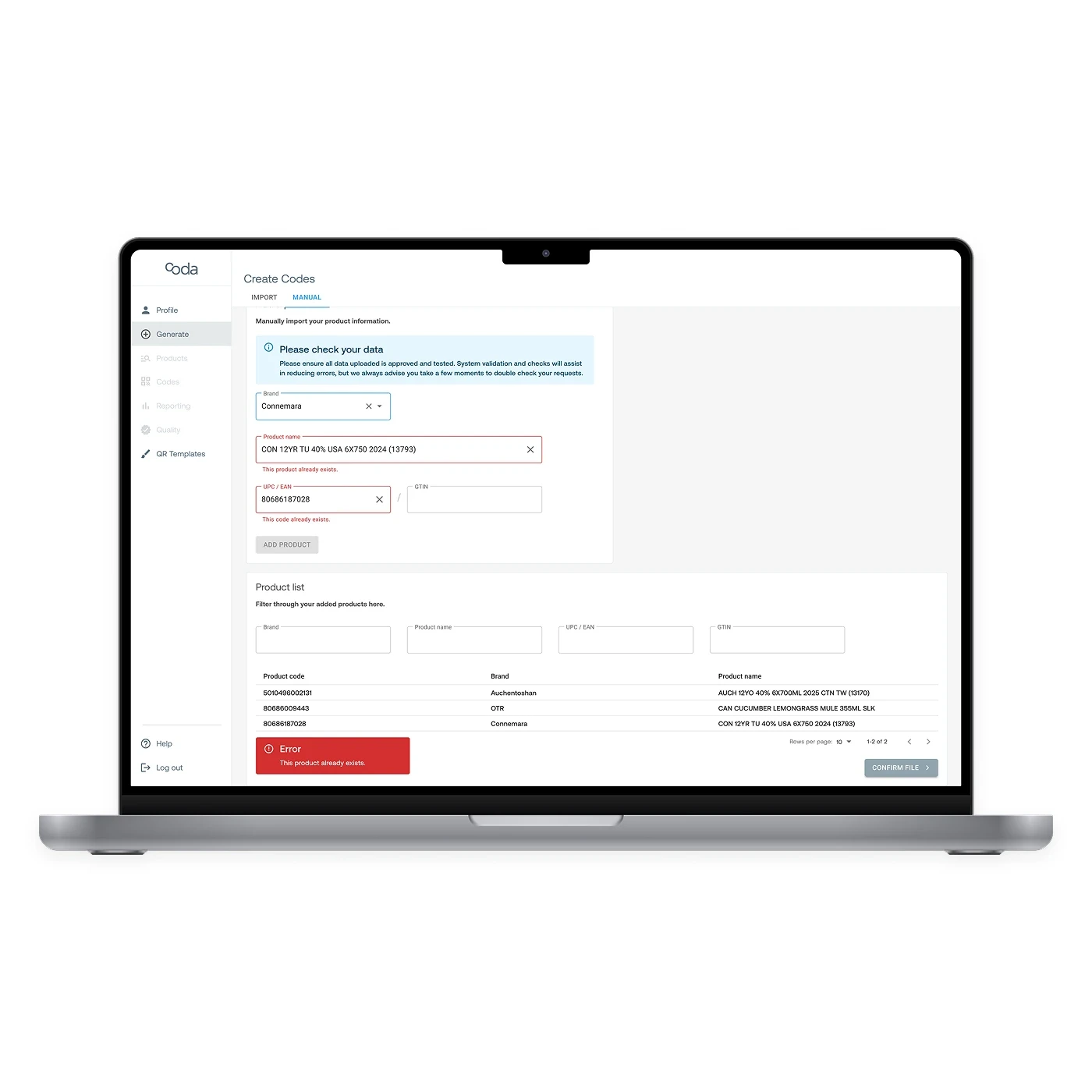
I knew the client worked with both large batches and single products, so I designed two distinct input flows to accommodate their reality: a CSV Import with an intuitive column mapping interface for large batches, and a Manual Entry form for quick, individual additions. To prevent errors, I designed robust, real-time validation to catch issues at the earliest possible stage.
2. An Efficient Design System
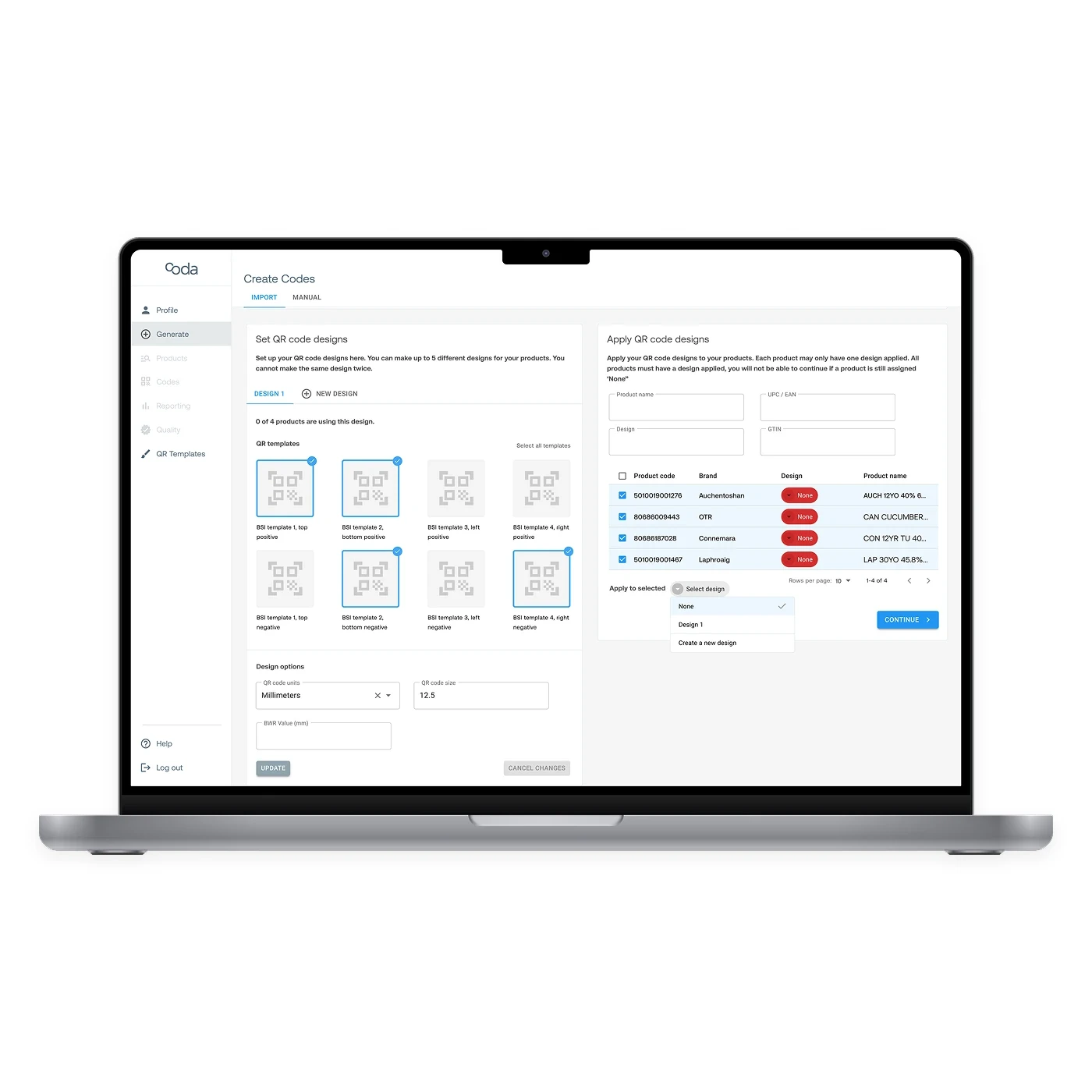
One of the most complex parts of my manual process was creating the different QR code designs. To solve this, I designed a flexible "Design Styles" component within the design system. This allows the client to create and save their own templates, but crucially, I designed two paths for creation: a dedicated area for setting up templates upfront, and an in-context option to create a new design directly from the product list's selection dropdown. This was a key decision to avoid breaking the user's flow.
3. Final Generation & Automated Validation
The final step is a clear summary screen where the user can review their work before hitting "Generate." This is where the most critical feature comes into play: once generated, the system performs an automated check to validate that every single QR code is working correctly. The user can then download all the verified codes in a single package and receive a confirmation email. This automated validation was a core requirement I identified, since it removes the biggest risk and time-sink of the manual process: human error. In the two years since launch, there have been no reported validation errors.


The Outcome
The platform replaced the manual workflow completely. In the year I ran it by hand, I handled more than 800 requests, each needing 8 QR code variations built and scan-tested, over 6,400 codes in total. The platform removed that 10+ hour monthly workload and, crucially, the risk of human error through automated validation. It is still used by Beam Suntory teams globally, generating the QR codes on nearly all their products.